AI Search
Senior Product Designer
2025
Problem
Keeping pace with changing expectations
As a platform built to help investors uncover insights, Affinity recognized the need to evolve beyond manual workflows and create an experience that aligned more with what customers expected of digital experiences.
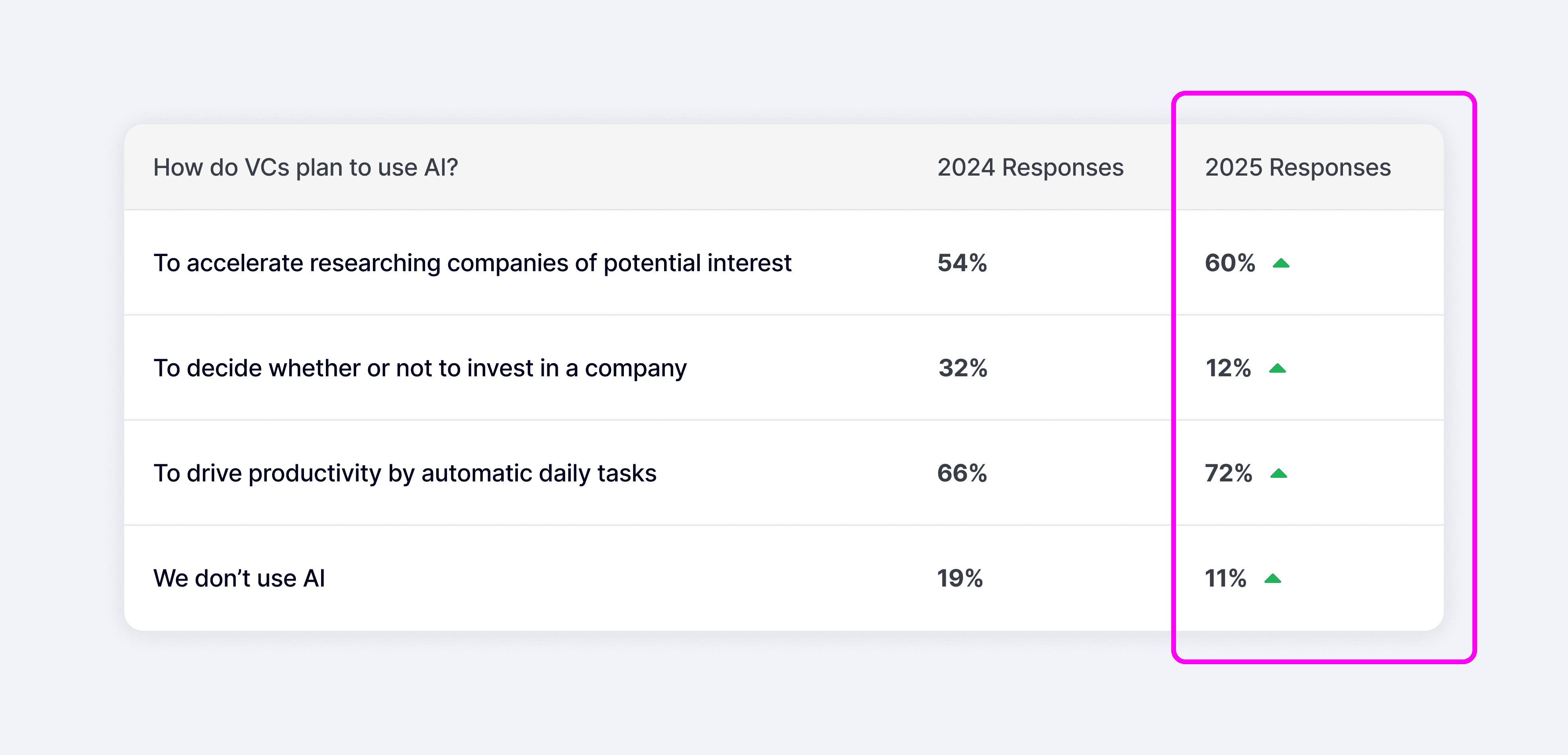
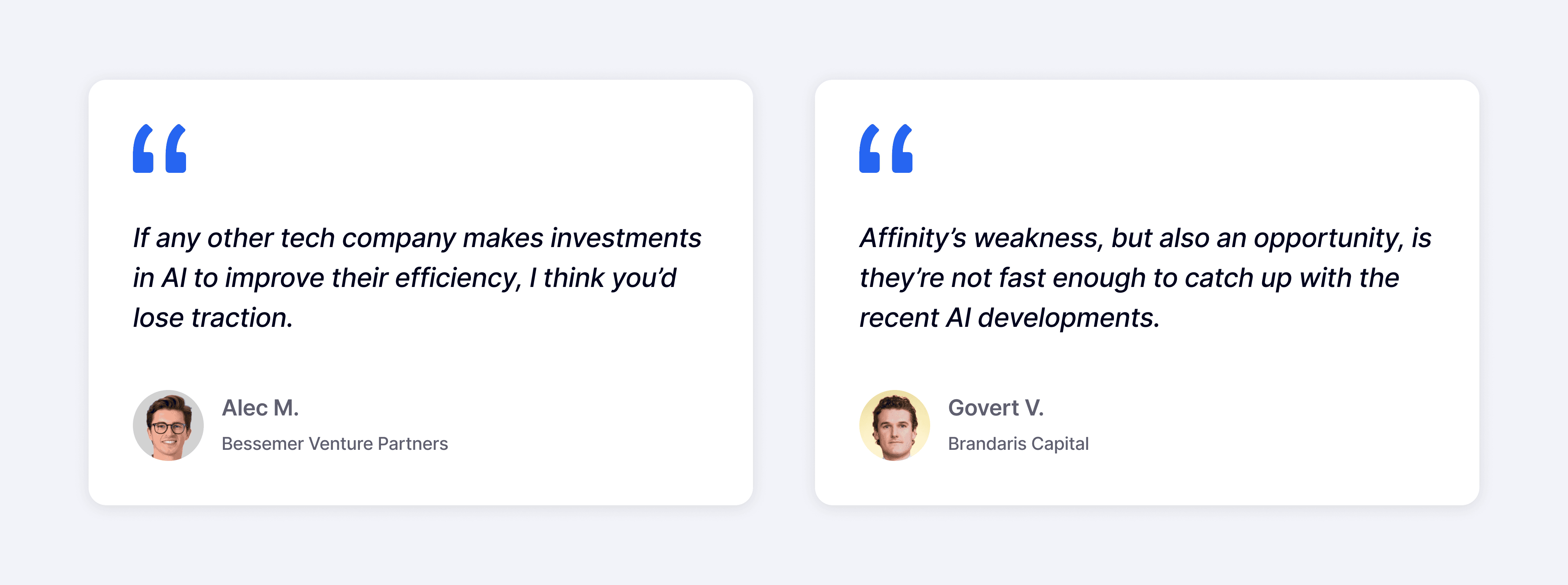
As AI became more prevalent, expectations were shifting quickly and many customers felt Affinity was no longer meeting their baseline needs. Within just a year, our survey showed a significant increase in teams planning to incorporate AI into their workflows, which highlighted the opportunity to rethink how the product could better support them.
Approach
Balancing immediate value with the future state
After conducting extensive customer research, we defined a long-term vision of evolving Affinity from a CRM focused on managing deals and relationships into an AI-powered partner that proactively surfaced insights, recommendations, and next steps throughout a user's workflow.
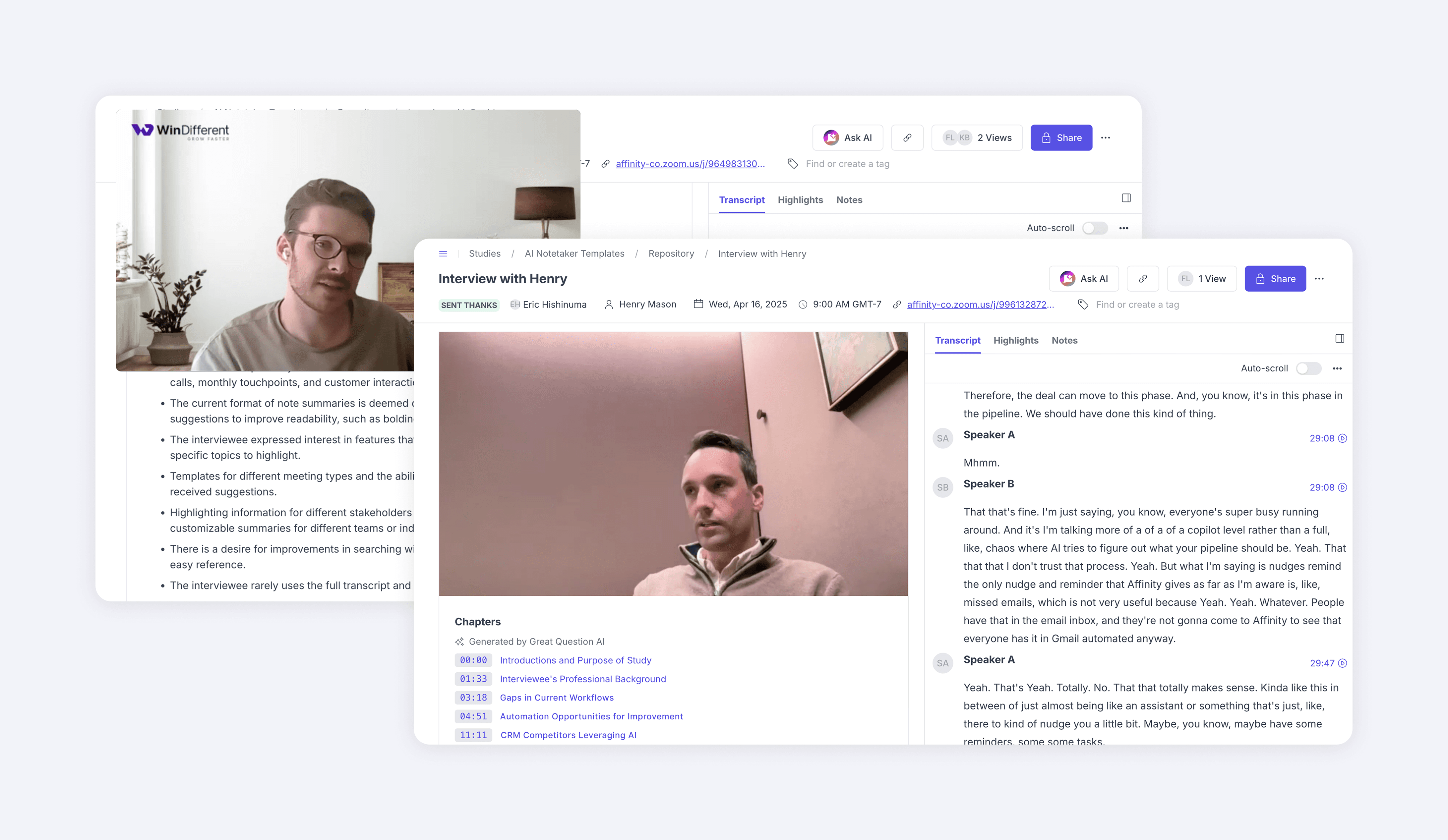
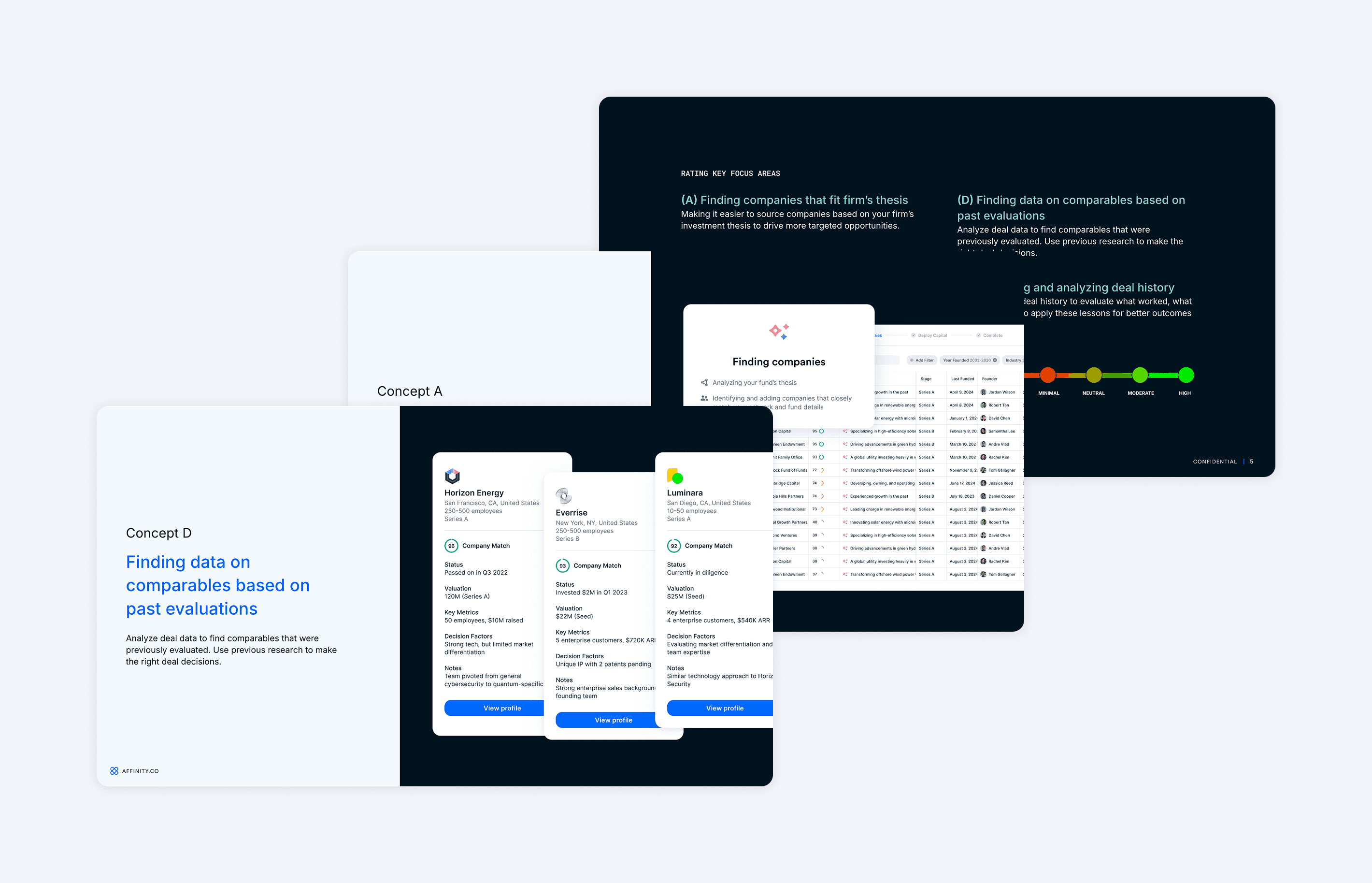
However, rather than trying to build the entire vision at once, we needed a practical entry point. Through our research, we found that one of the biggest pain points was simply finding information in Affinity. Users frequently had questions about their pipeline, but were forced to rely on keyword searches, filters, and digging through notes to get answers.
For investors managing hundreds of deals, this process was cumbersome and often depended on remembering exact names or terminology.
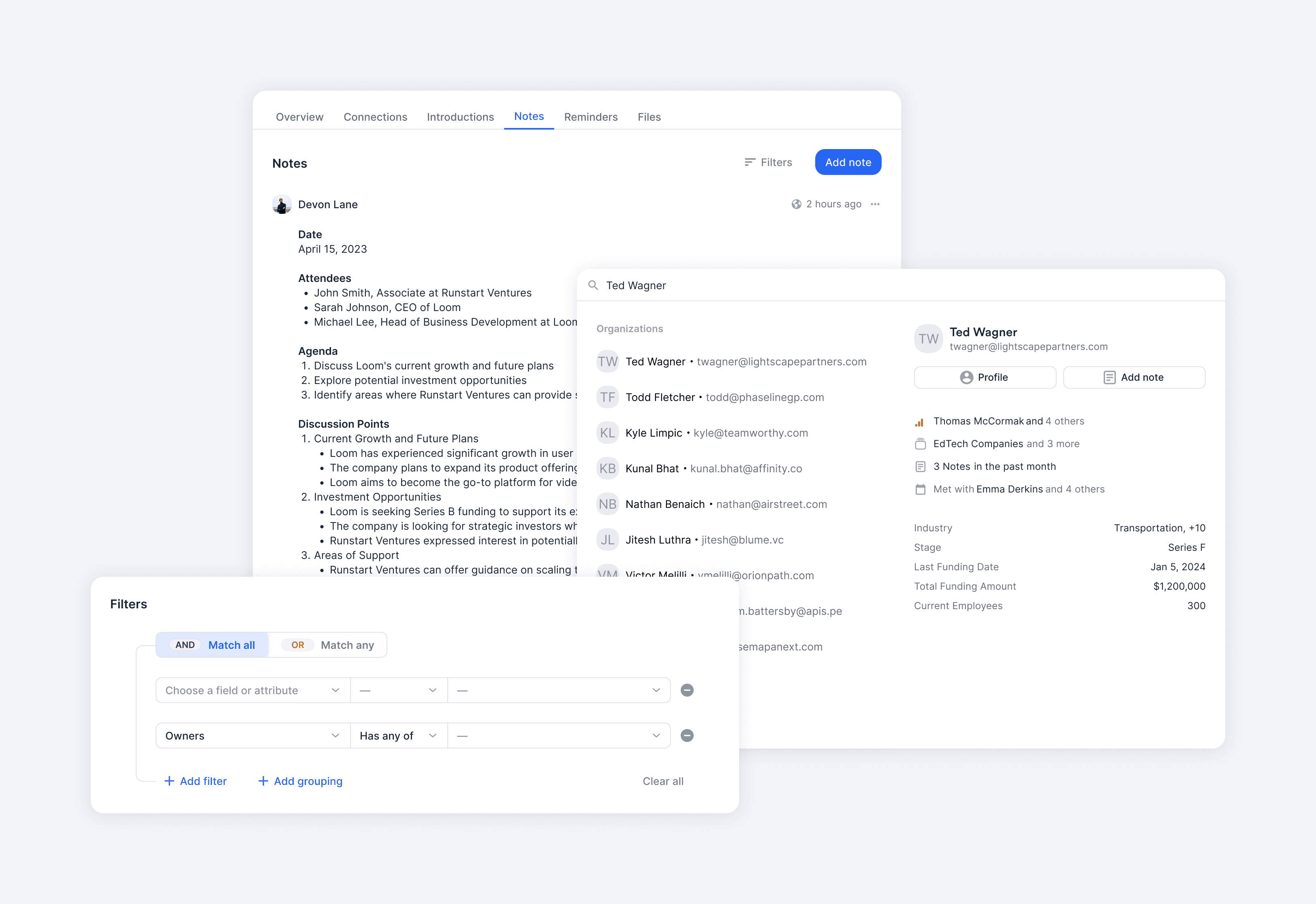
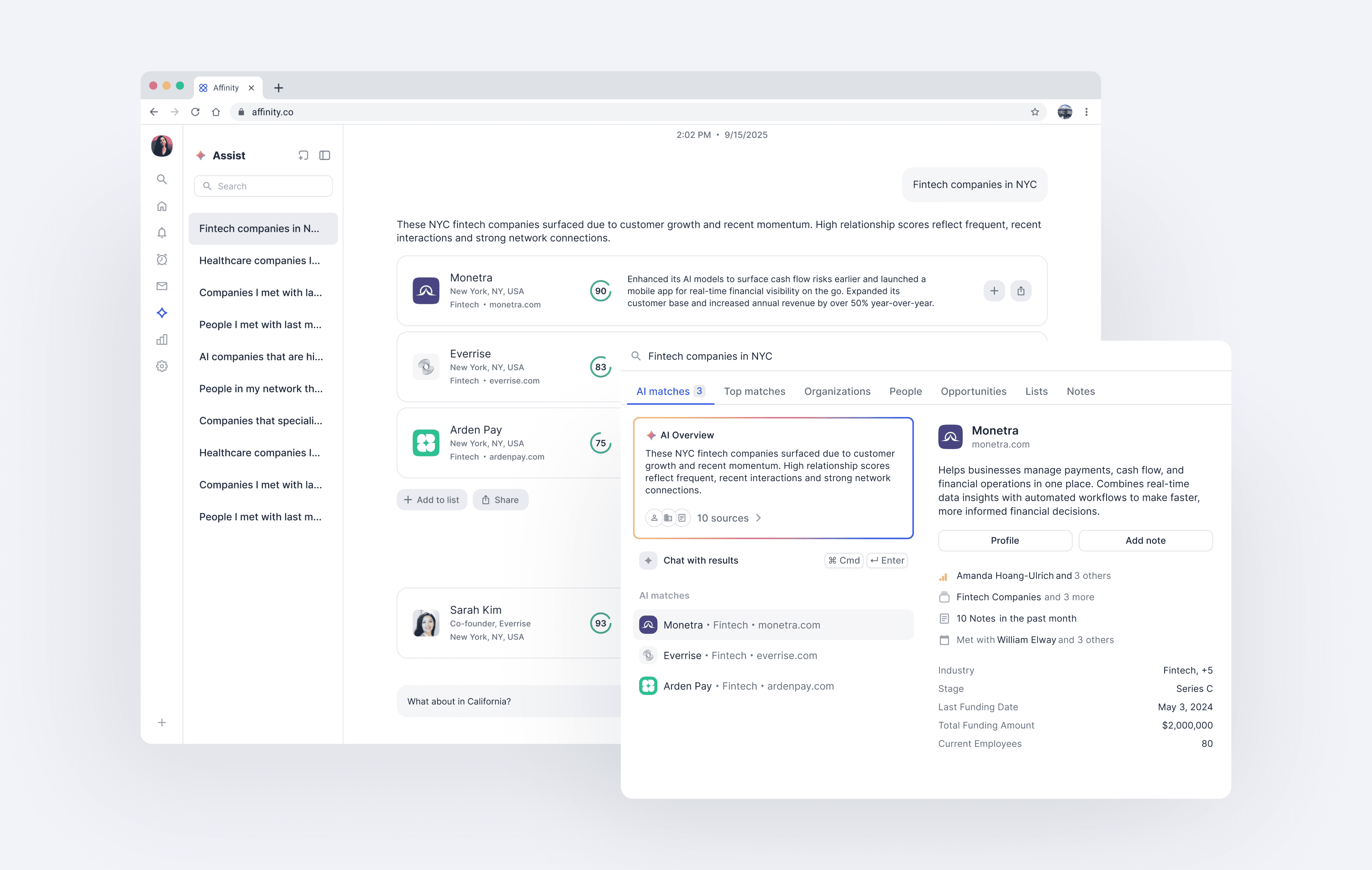
Rather than relying solely on keyword searches, customers wanted to describe what they were looking for naturally and have the system understand their intent. Since global search was one of the platform's most heavily used features, it provided the ideal foundation for introducing AI.
By starting with semantic search, we could address an immediate need while laying the groundwork for a broader AI ecosystem that would eventually support conversational exploration, recommendations, and agentic workflows across the product.
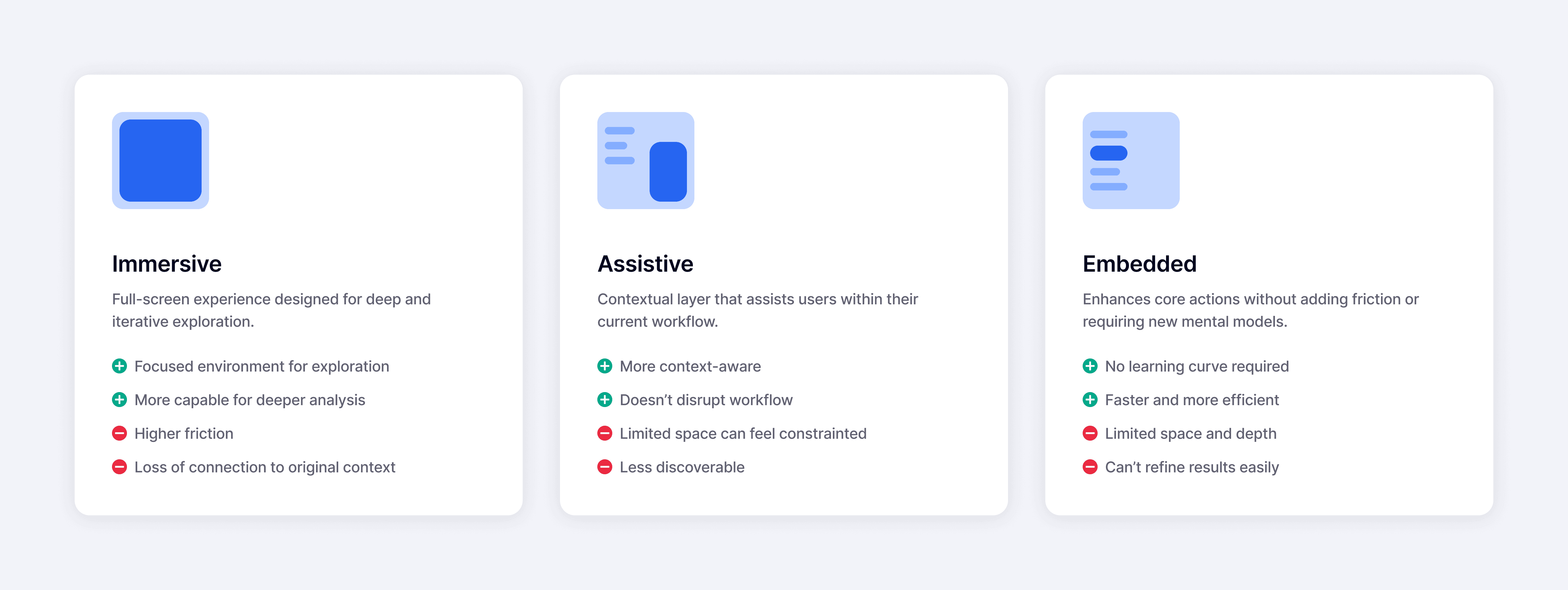
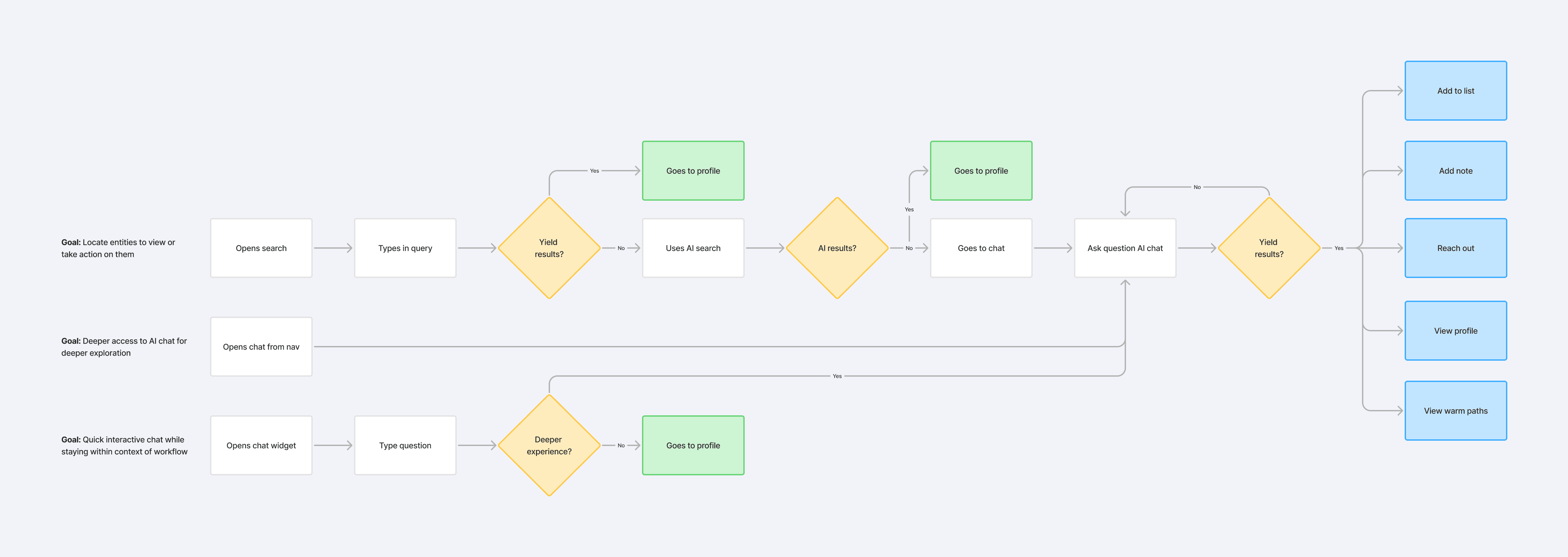
Iterations
Building value through incremental changes
After sharing our concepts with customers, we uncovered some insights that challenged our initial assumptions:
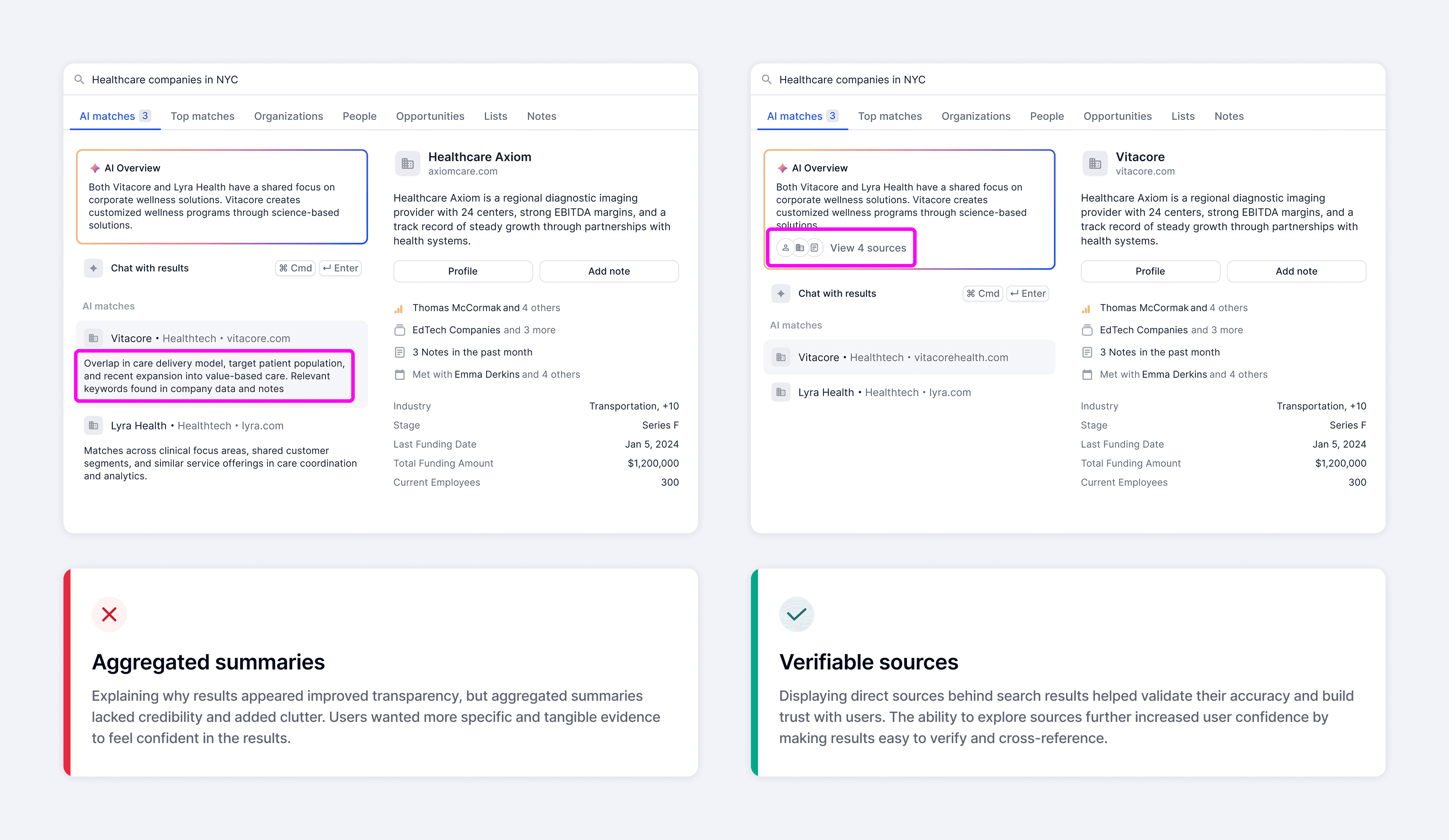
Trust remained a barrier: Users were skeptical of AI-generated results and wanted greater transparency into why results were surfaced and what sources they were based on.
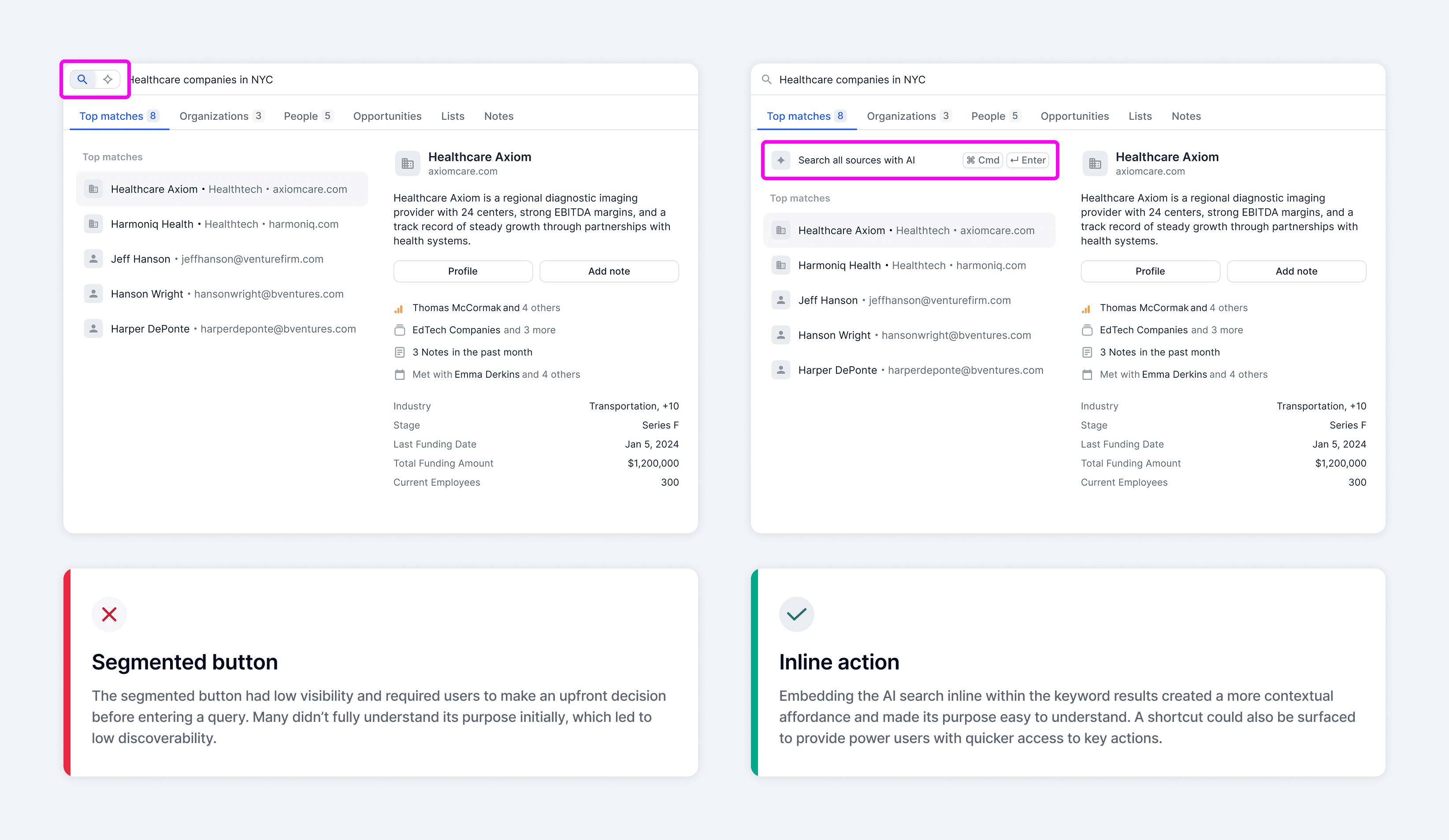
Keyword search still played an important role: Rather than replacing traditional search, customers viewed semantic search as a complement. They still preferred keyword search when they knew exactly what they were looking for because of its speed and precision.
We addressed some of these insights through a series of design refinements.
Final Designs
Building toward an experience that reflects how people work
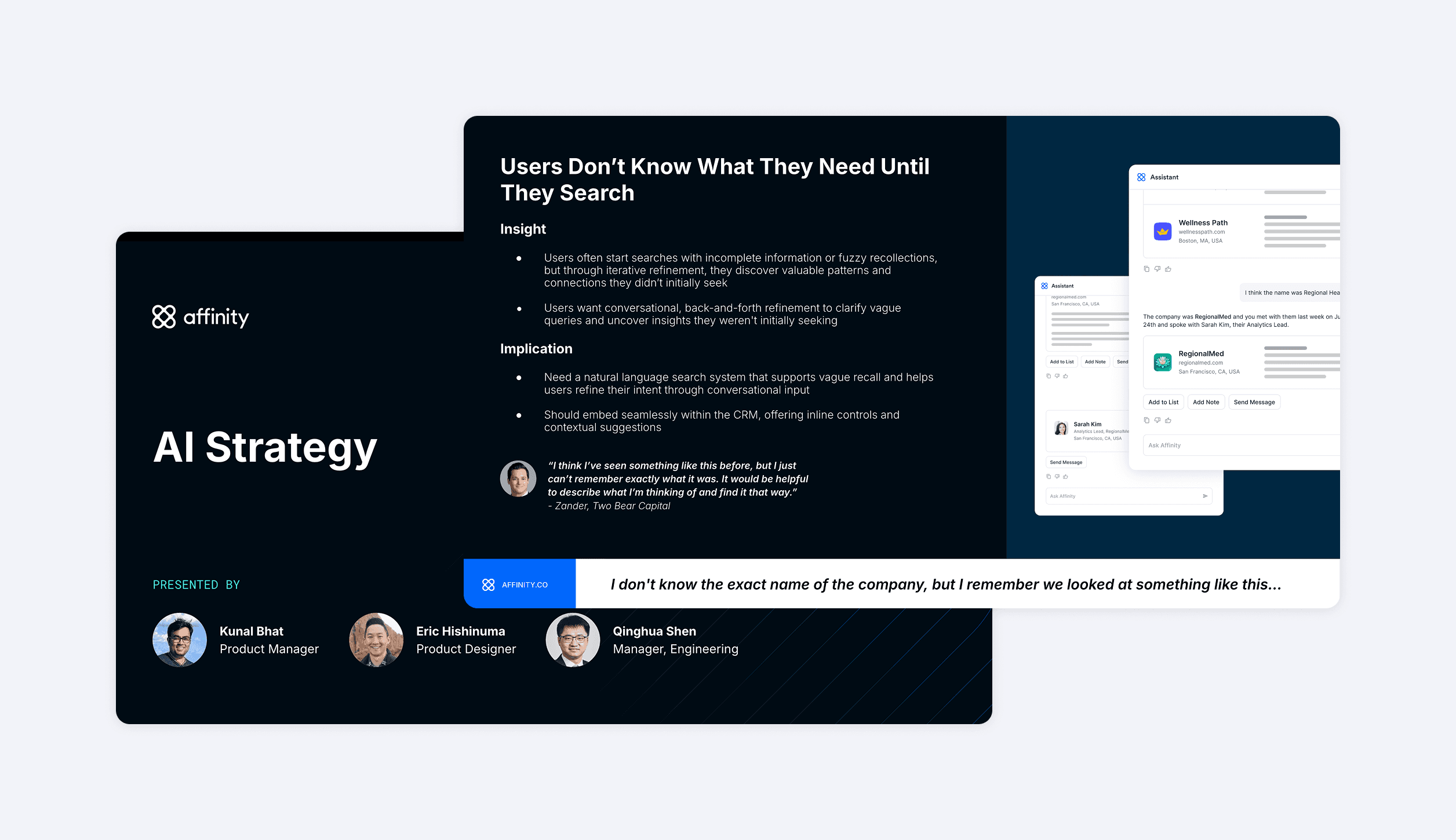
We presented our AI strategy to the broader organization and shared our vision of evolving Affinity into an agentic partner that proactively helps users through their workflow. We also introduced a phased roadmap outlining how we planned to bring that vision to life with semantic search positioned as the first milestone. Framing semantic search as the foundation for our broader AI strategy gave teams visibility into the long-term direction of the product and helped them understand how it would influence their own roadmaps.
Establishing AI design principles was important since AI would shape experiences across the product. We defined a consistent framework so every AI interaction could feel predictable, familiar, and in alignment with user expectations, which made the experience easier to understand and trust.

Impact
Sharing our long-term AI strategy
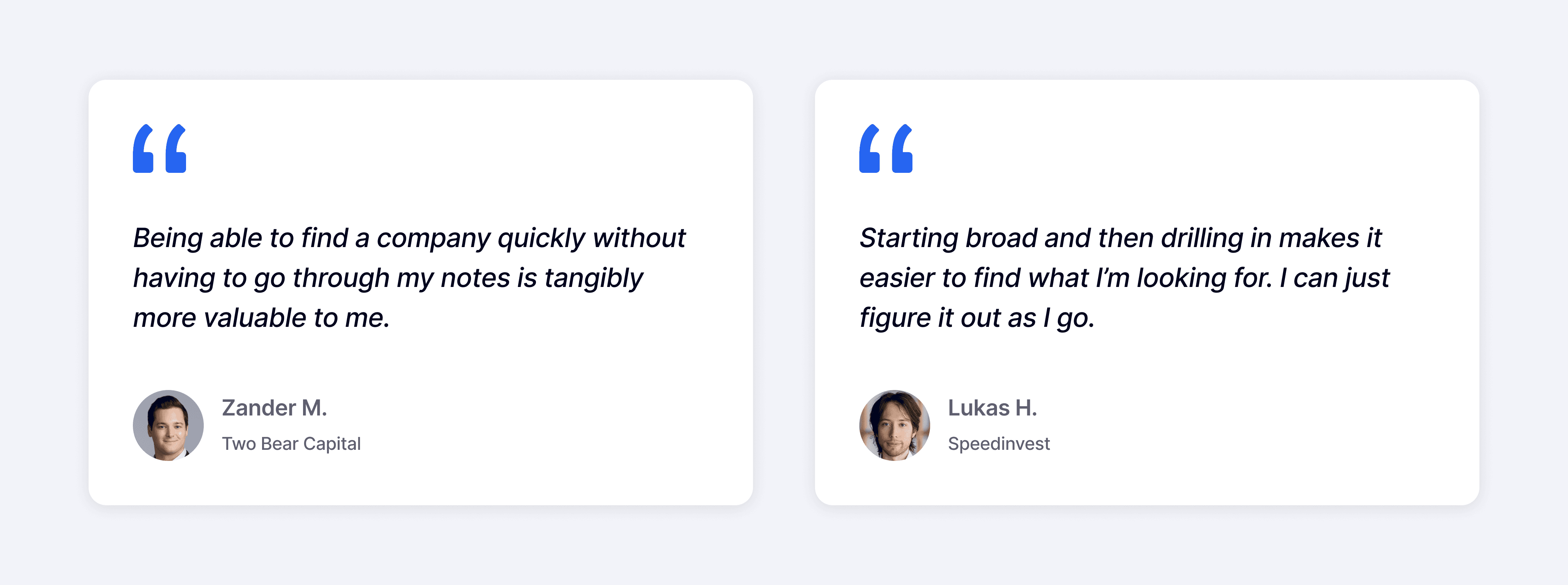
The AI strategy and semantic search initiative laid the foundation for Affinity's broader AI roadmap and were introduced to customers as part of our future vision. Early feedback confirmed that semantic search solved an immediate pain point while demonstrating the long-term value of our AI direction.
Takeaways
Design's role in creating clarity and alignment
The AI initiative drew significant leadership attention and cross-functional visibility, as multiple teams relied on it to inform their own roadmaps. Keeping everyone aligned was just as important as designing the product itself. We regularly shared customer research, design explorations, and work in progress through weekly product reviews and Slack updates to ensure teams had visibility into key decisions and the rationale behind them.
Equally important was communicating the long-term vision. By creating hi-fi concepts early on in the process, we gave stakeholders a tangible view of where we were headed. This helped build alignment around the broader strategy, why semantic search was the right starting point, and how each milestone contributed to the future direction of the product.
This project helped reinforce to me that design extends beyond just the interface, especially in emerging spaces like AI. It plays a critical role in aligning teams around a common vision and helps us navigate ambiguity with confidence.