AI Search
Senior Product Designer
2025
Background
Background
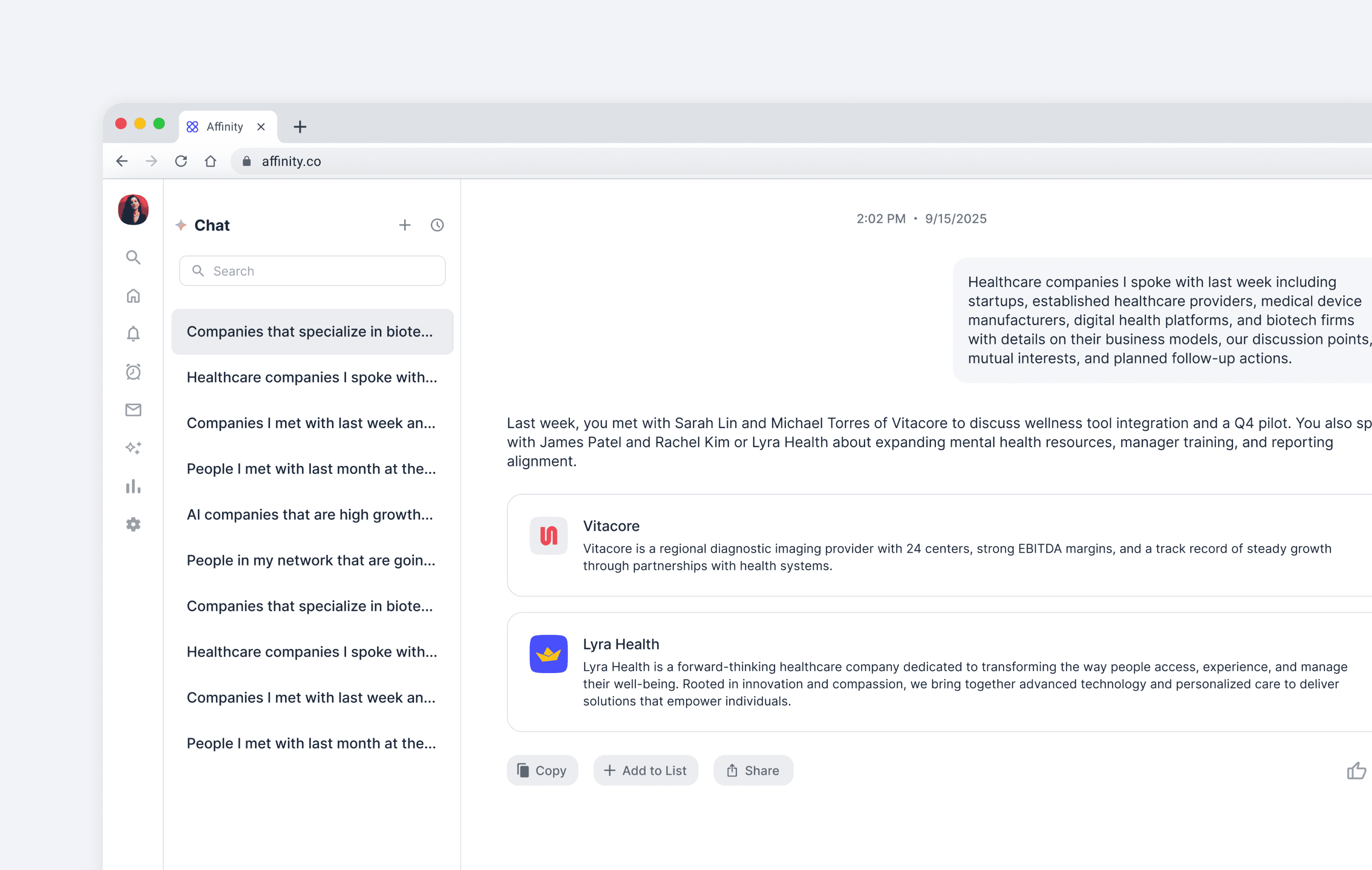
As we've all become aware, the rise of AI has reshaped our expectations of digital experiences. Products have evolved from passive systems to intelligent, tools, raising the bar for experiences that are more intuitive and better able to anticipate user needs.

Within this context, Affinity recognized the need to move beyond manual workflows to a more intelligent system aligned with evolving expectations. As a platform built to surface relationship insights, this meant enabling users to uncover insights and act on them more easily.
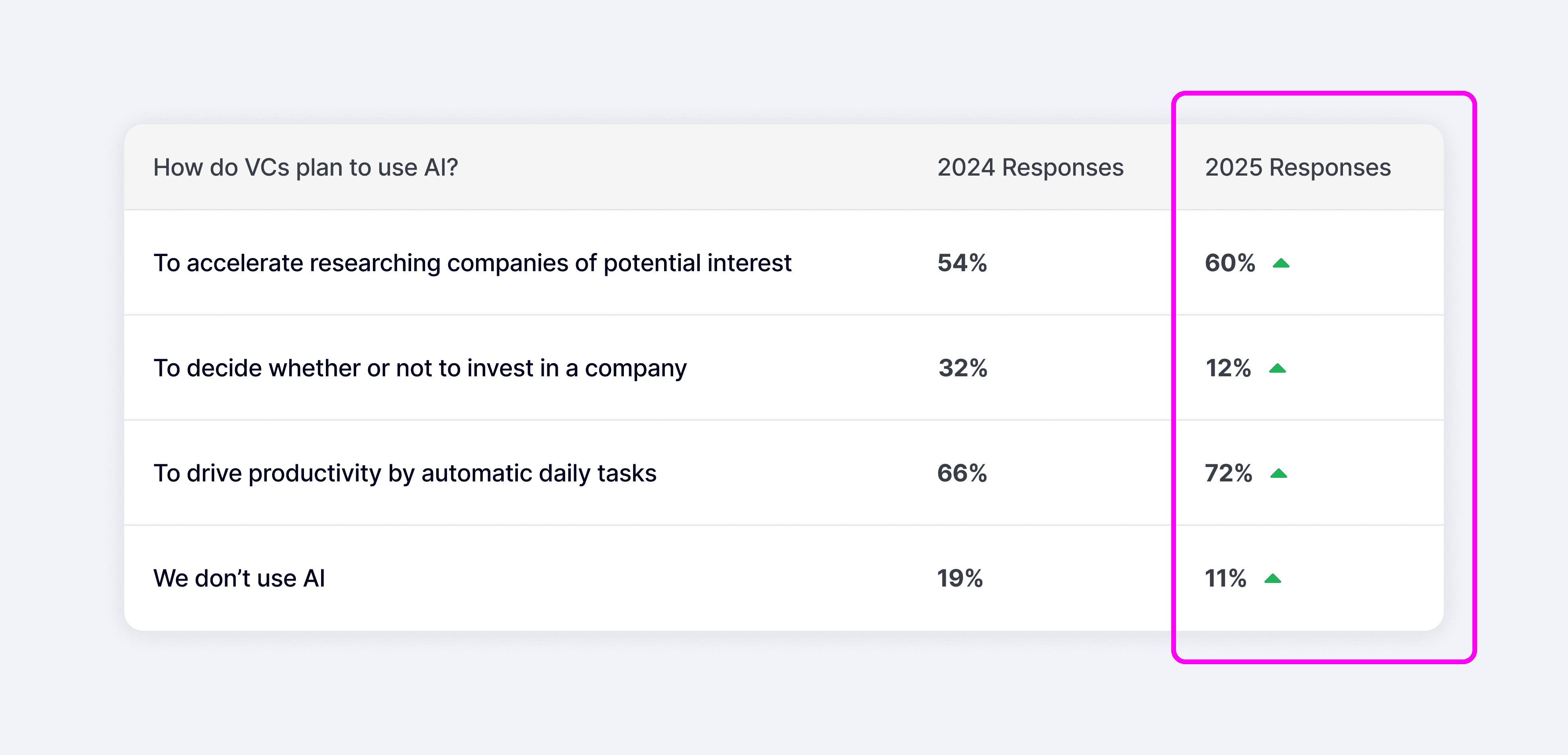
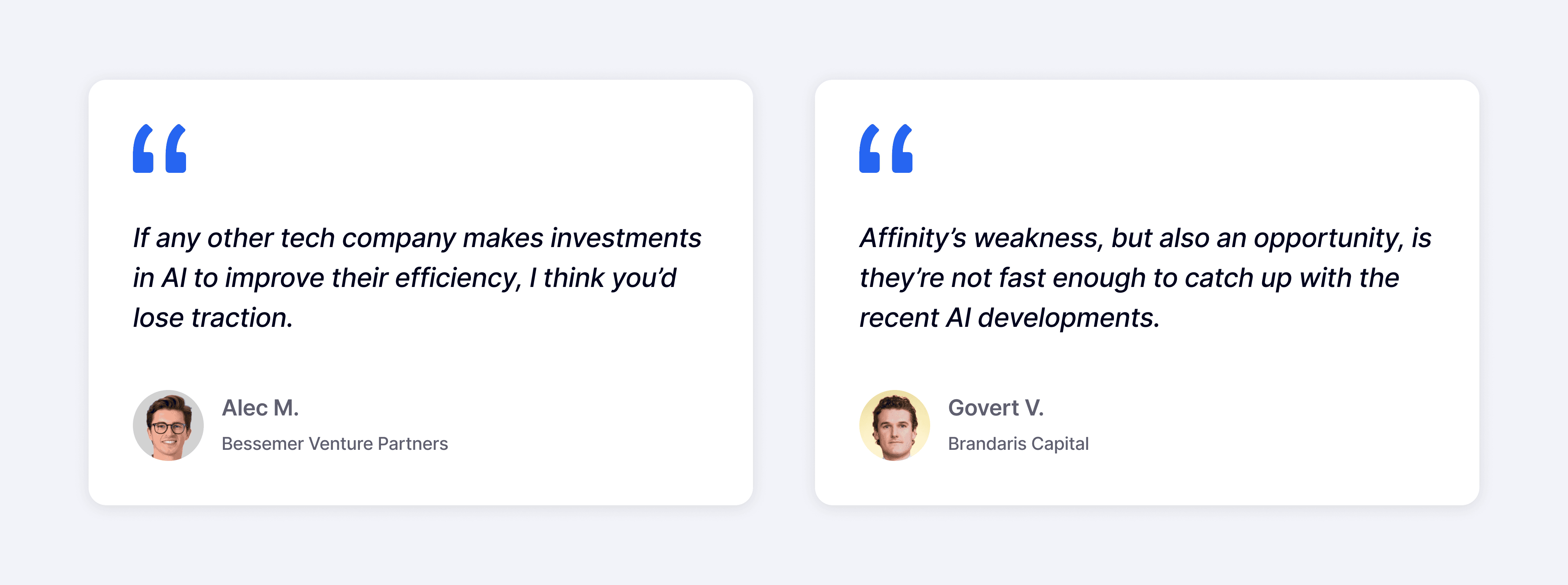
At the time, customer expectations were evolving and many were beginning to feel that Affinity was no longer meeting their baseline needs. Within just a year, our survey showed a significant rise in customers planning to use AI in their daily workflows, highlighting how rapidly expectations had shifted.
While it was clear we needed to act, we wanted to do so thoughtfully, avoiding the temptation to introduce AI features without a clear understanding of their actual value.
👥 Team
I worked in a cross-functional squad that included 1 PM, 1 front-end engineer, 2 ML engineers, and a team of back-end engineers.
💼 Role
I was the sole designer and led the end-to-end design process from research and vision to final handoff.
Goals
Goals
We set out to understand how AI could meaningfully improve the product and focused on uncovering gaps in the current experience. While we knew customers were increasingly asking for AI and expected it to be part of the product, we didn't have as much clarity on what that actually meant in practice. This required a research-driven approach to understand how and where it could deliver real value.
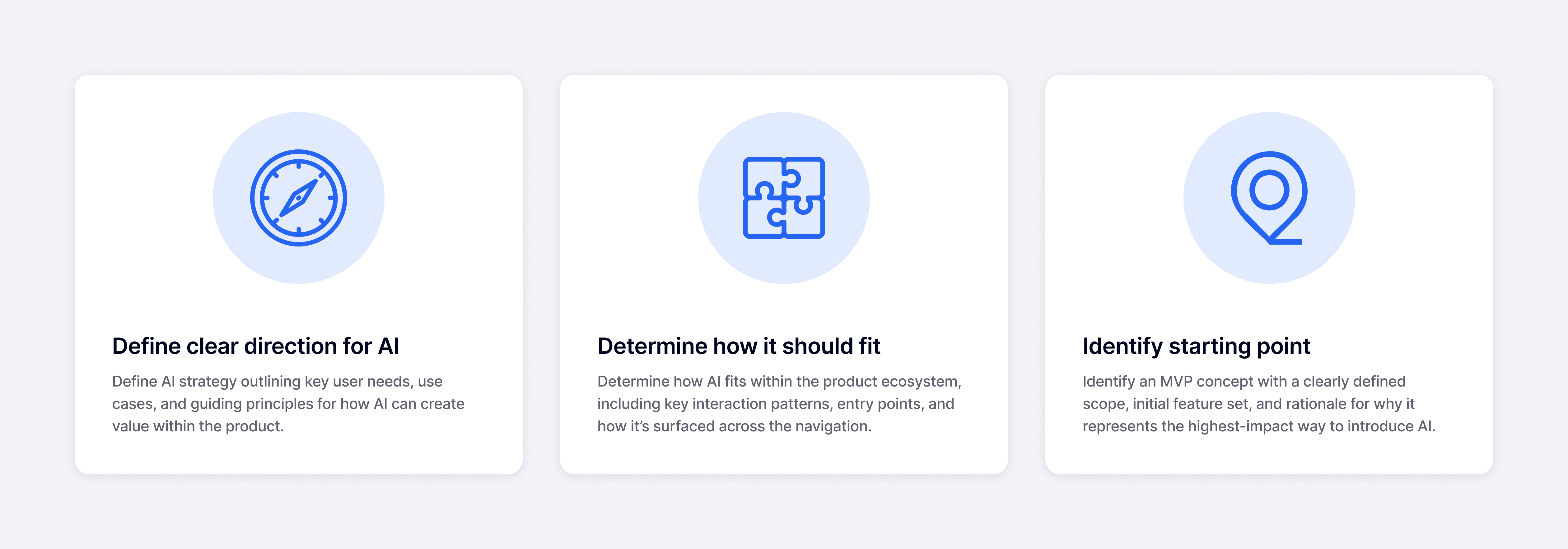
Our goal with this work was to define a clear direction for AI at Affinity, determine how it should fit into the product experience, and identify a starting point that could deliver value quickly.
Research
Research
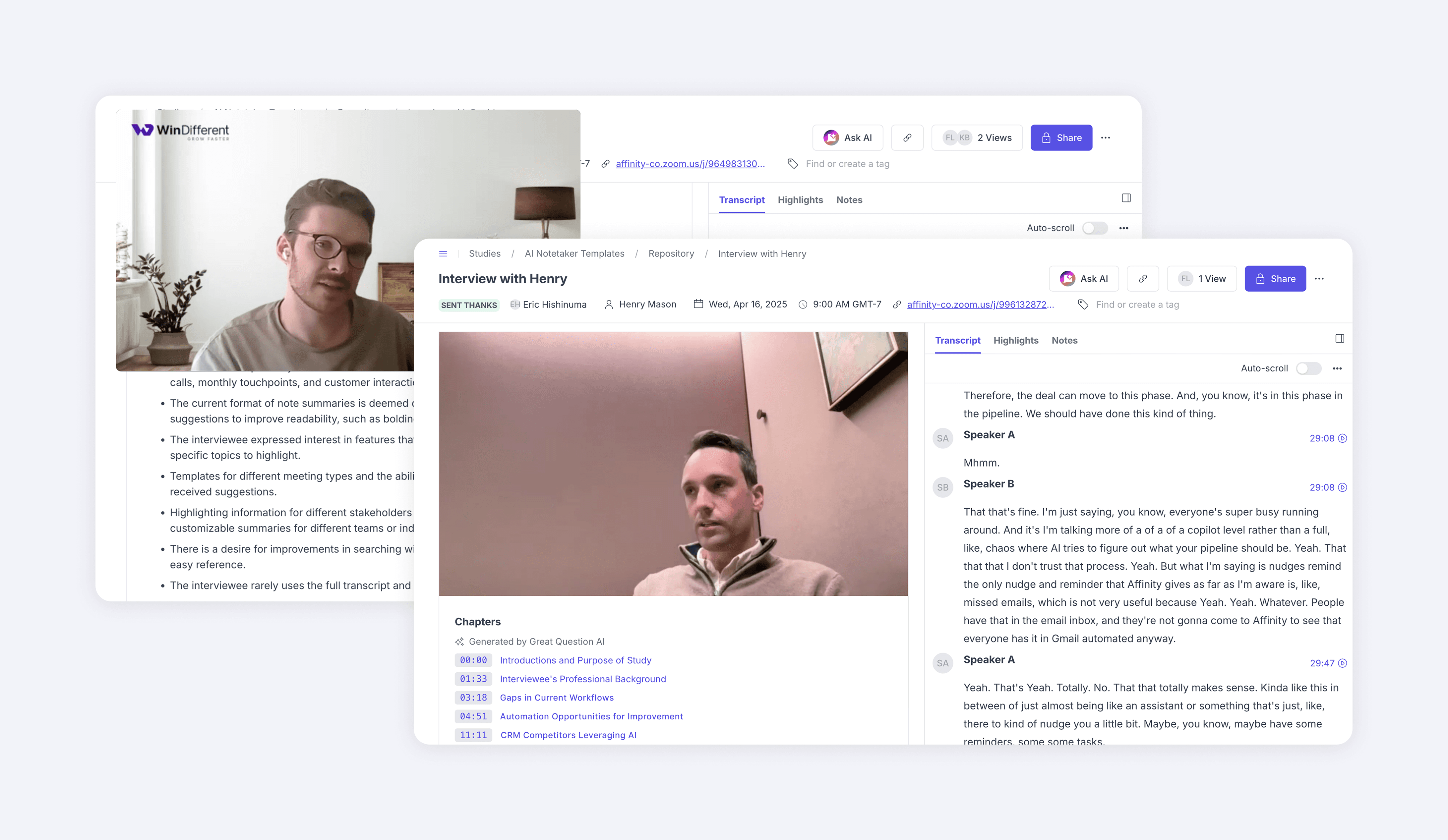
To kick off the research, I partnered with my PM to conduct user interviews to understand more thoroughly how customers were thinking about AI. To avoid bias, we kept conversations intentionally broad and focused on uncovering gaps in the overall experience rather than placing emphasis on AI.
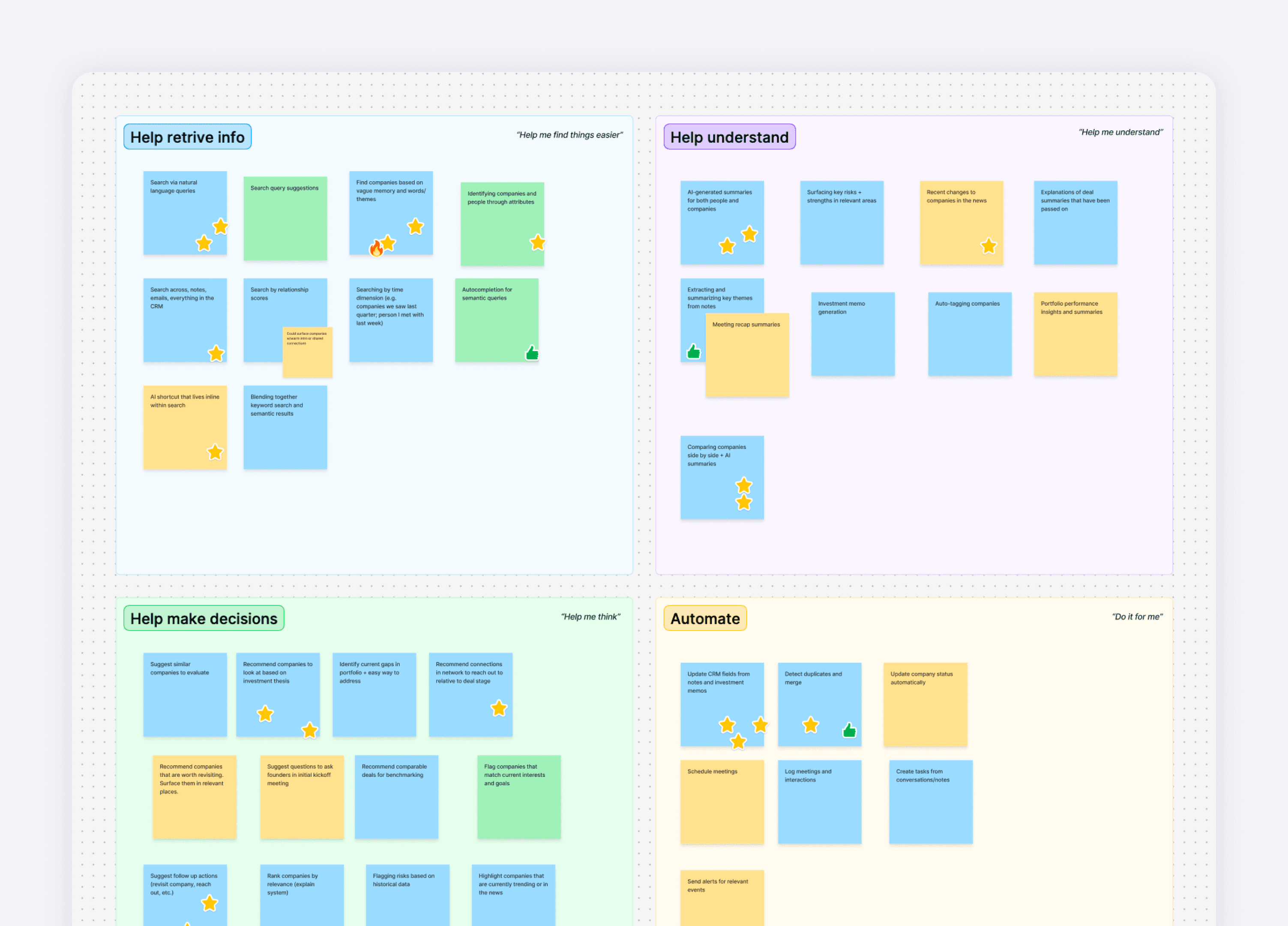
After synthesizing insights, I developed a set of exploratory concepts and brought them back to users to evaluate and rank based on relevance to their day-to-day workflows. These concepts ranged from surfacing relevant connections for outreach to automating data extraction from emails and pitch decks.
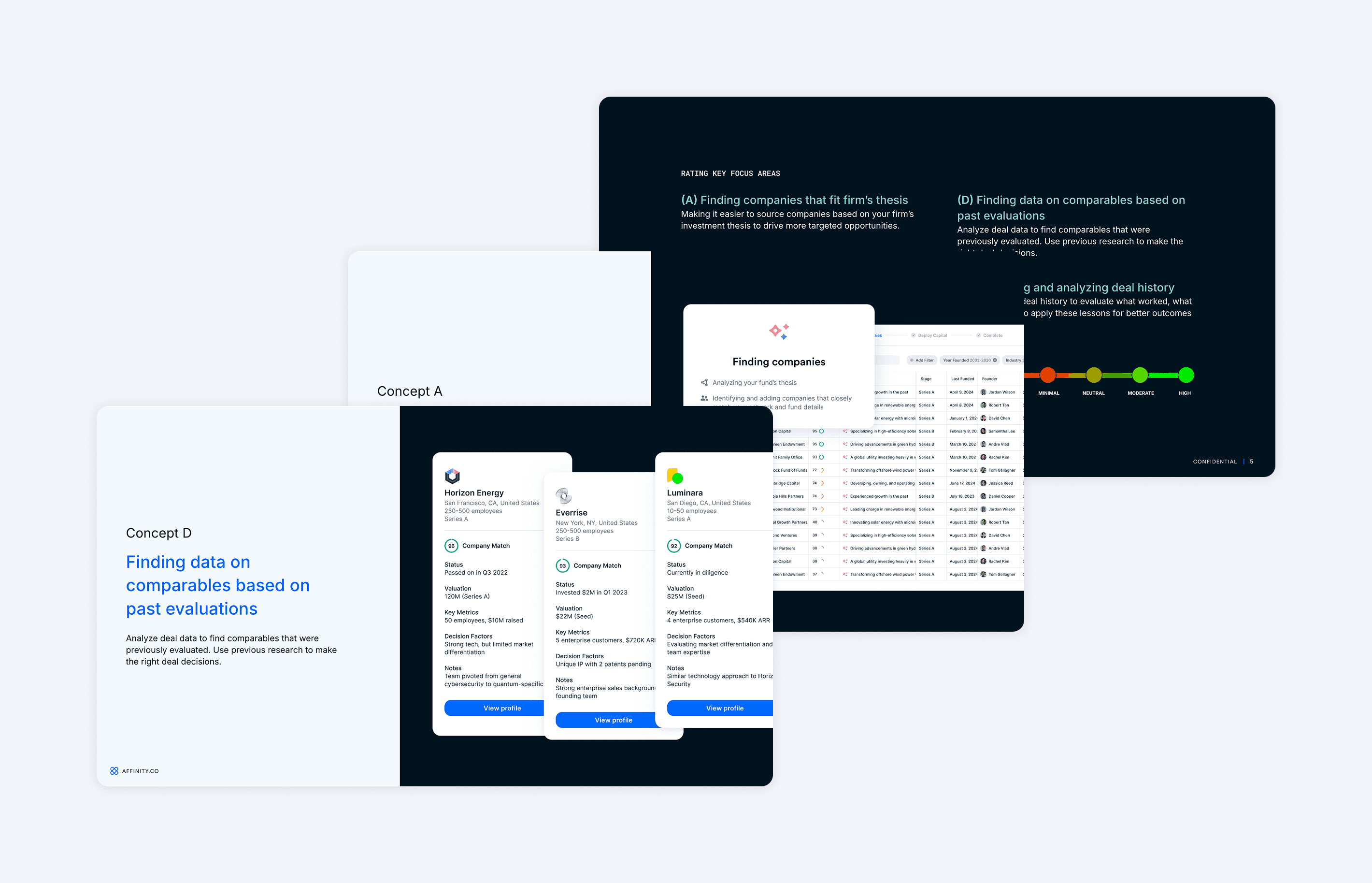
Across multiple sessions, a clear need emerged: users wanted a more easier and intuitive way to ask questions and get answers from their data in Affinity. This concept ranked #1 out of 6 with an average score of 4.3 out of 5 in perceived value.
While users could technically access this information, doing so required a lot of manual effort, highlighting an opportunity for us to make information access easier and more aligned with evolving expectations.
Problem
Problem
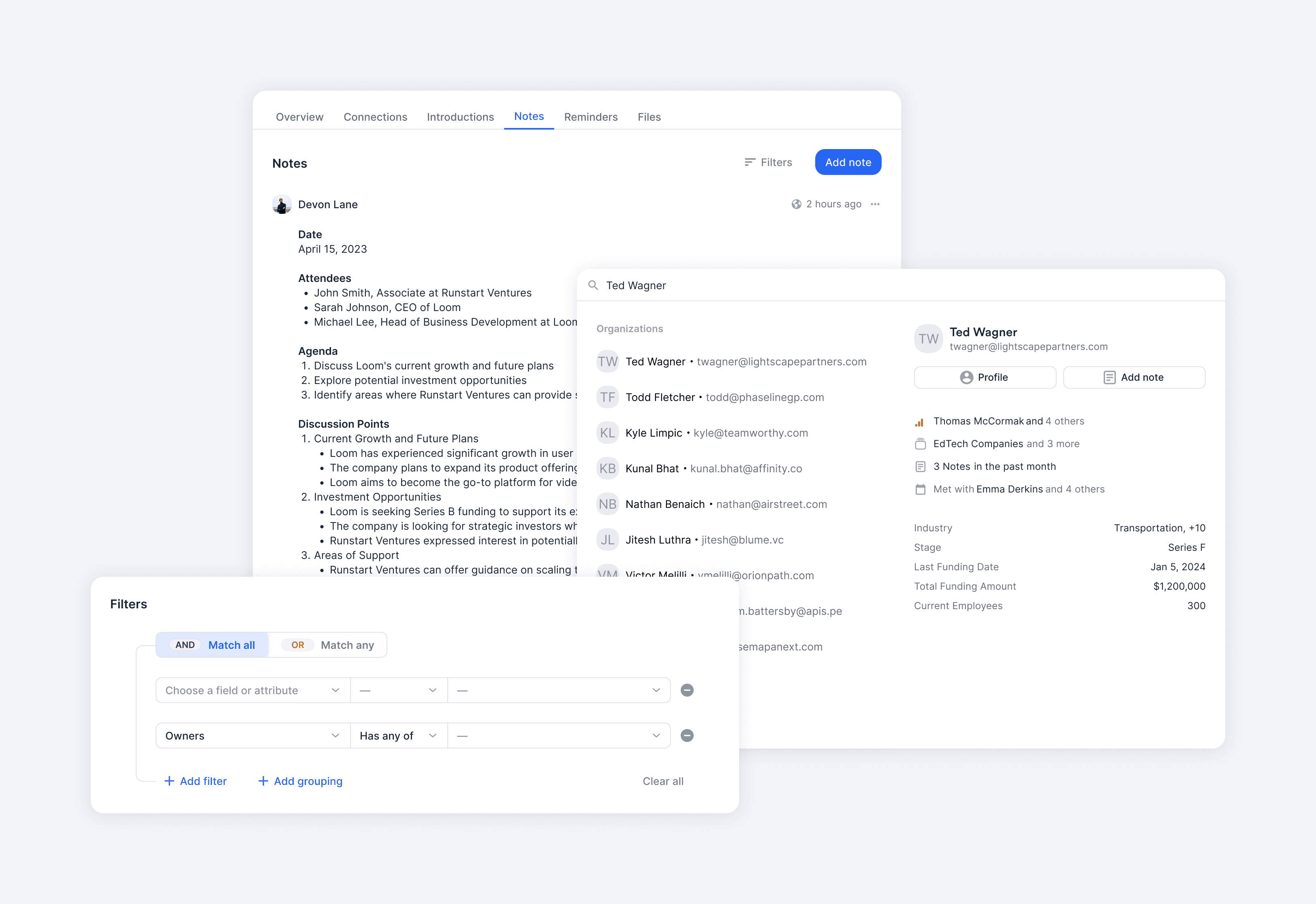
The core problem was that when users had questions about their data in Affinity, they relied heavily on keyword searches, filters, and manually digging through notes to find answers. For investors managing multiple companies and deals, this made quick, easy access to information critical.
While users relied on global search to navigate companies, deals, and past interactions, it often fell short due to its rigidity. Despite some recent improvements, users still expected a smarter search experience that aligned with how they interact with LLMs.
Assumptions
Hypothesis and assumptions
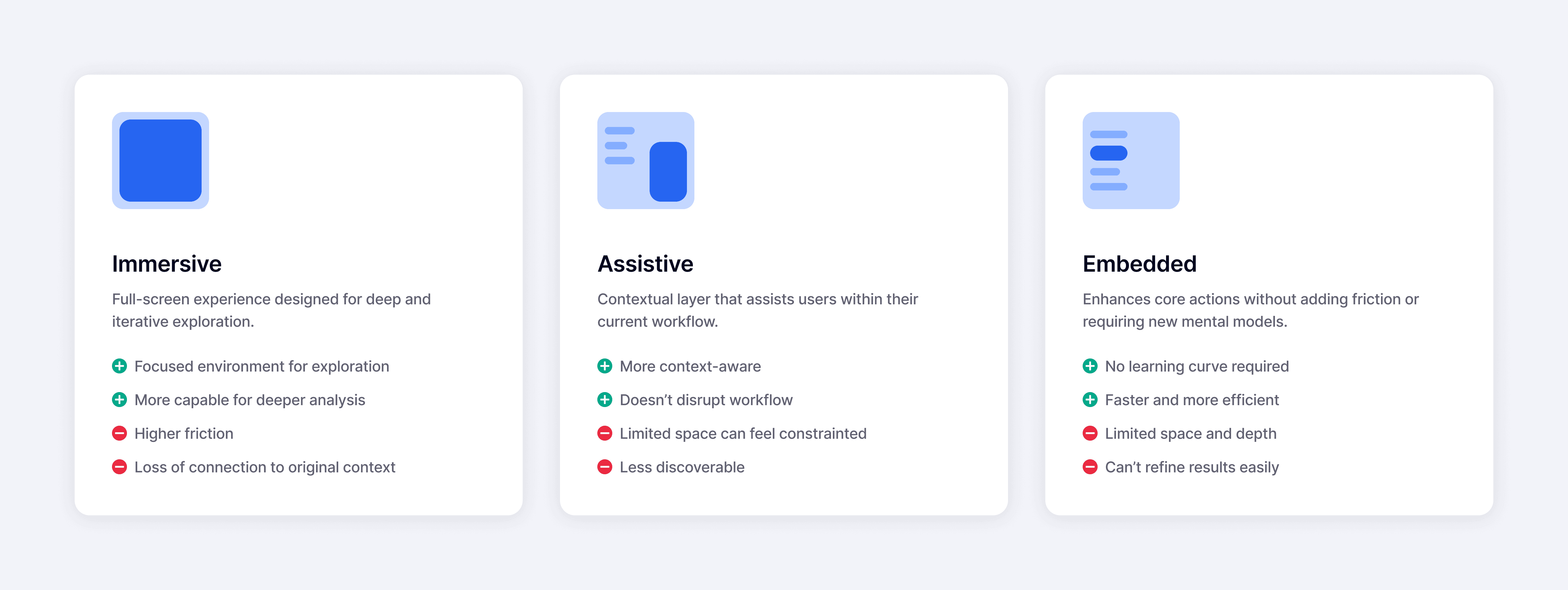
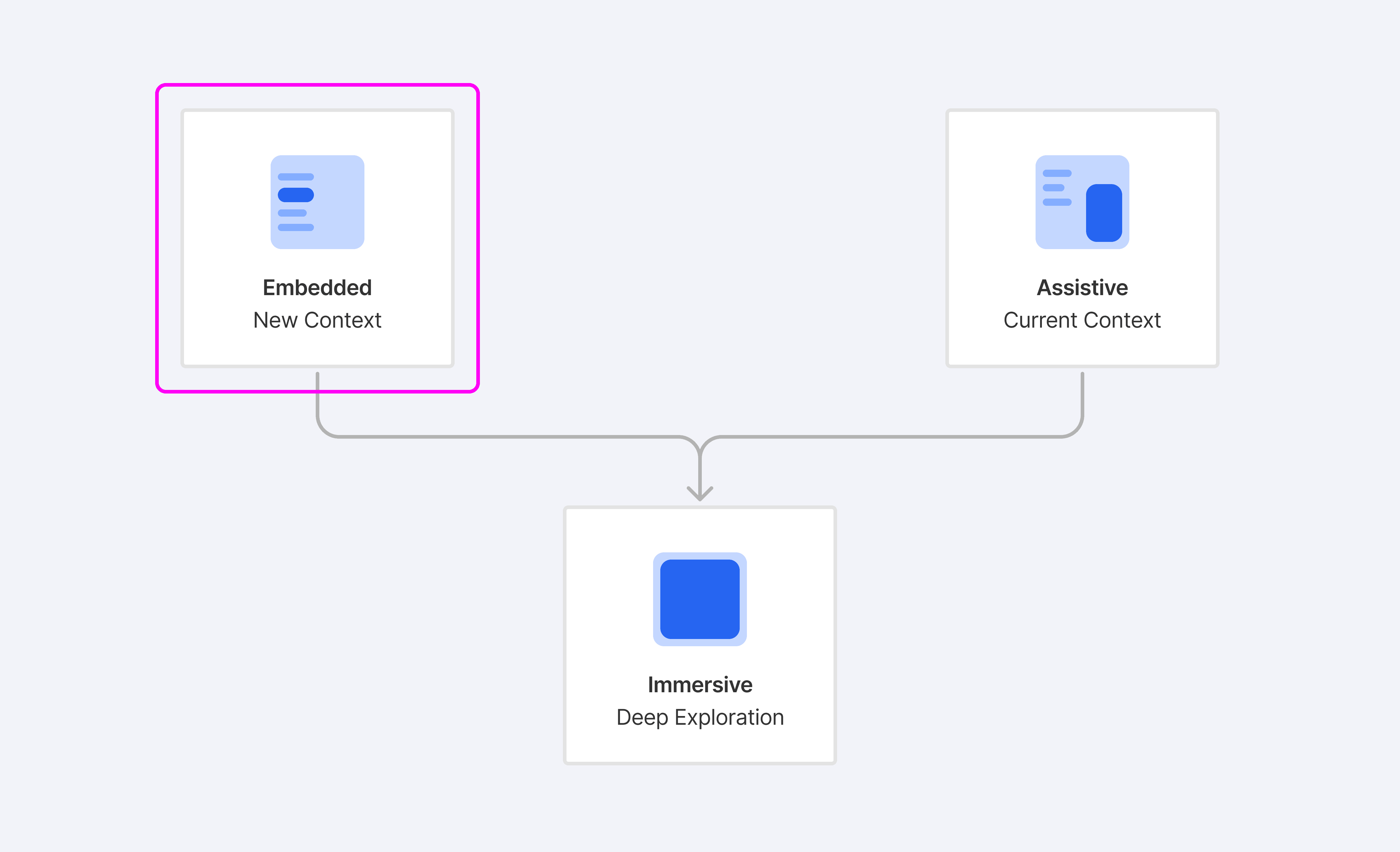
We explored multiple approaches to integrating AI into Affinity, which included a full-width immersive chat, an assistive modal, and an embedded experience within global search. While each of these offered value, we needed to identify a starting point that balanced feasibility with the highest immediate impact.
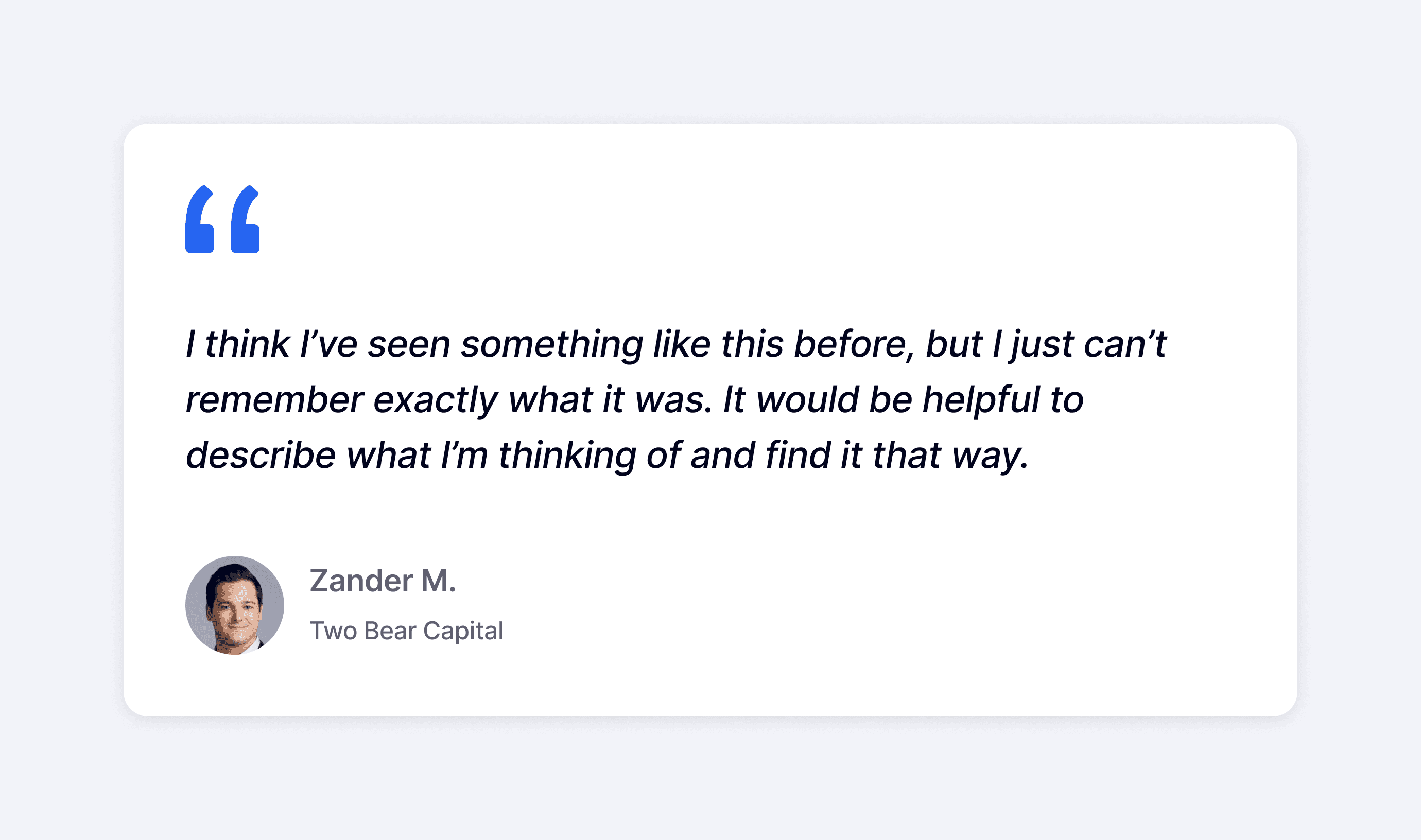
We identified global search as the most effective entry point for introducing AI into the product. As one of the most frequently used areas of the product, it was where users already spent a lot of their time, which made it a natural place to meet them where they already are.
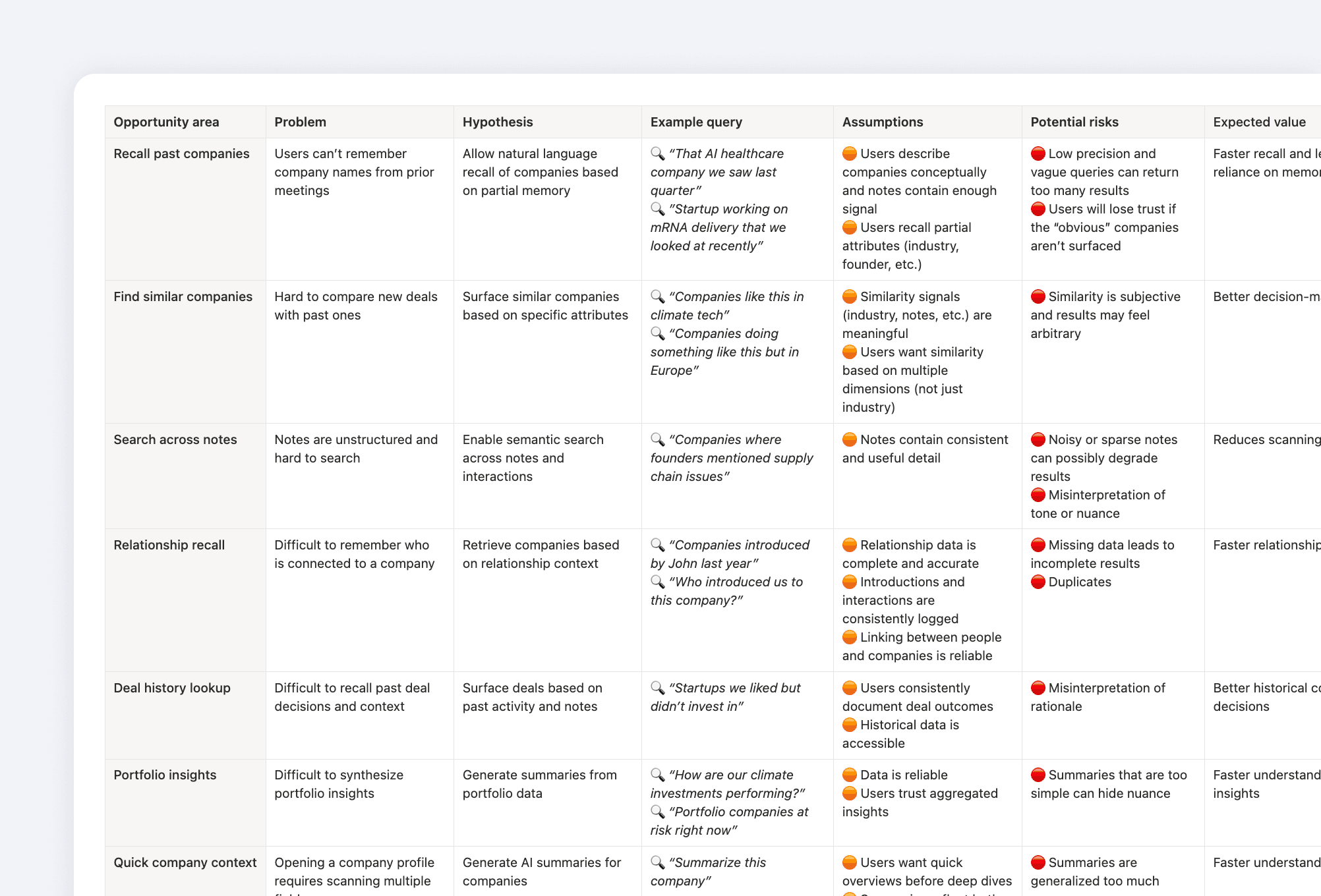
I partnered with my PM to define key hypotheses, assumptions, and opportunities for evolving our global search. Our core hypothesis was that introducing semantic search would enable users to find information faster and with less effort, improving their overall efficiency and satisfaction.
Explorations
Explorations
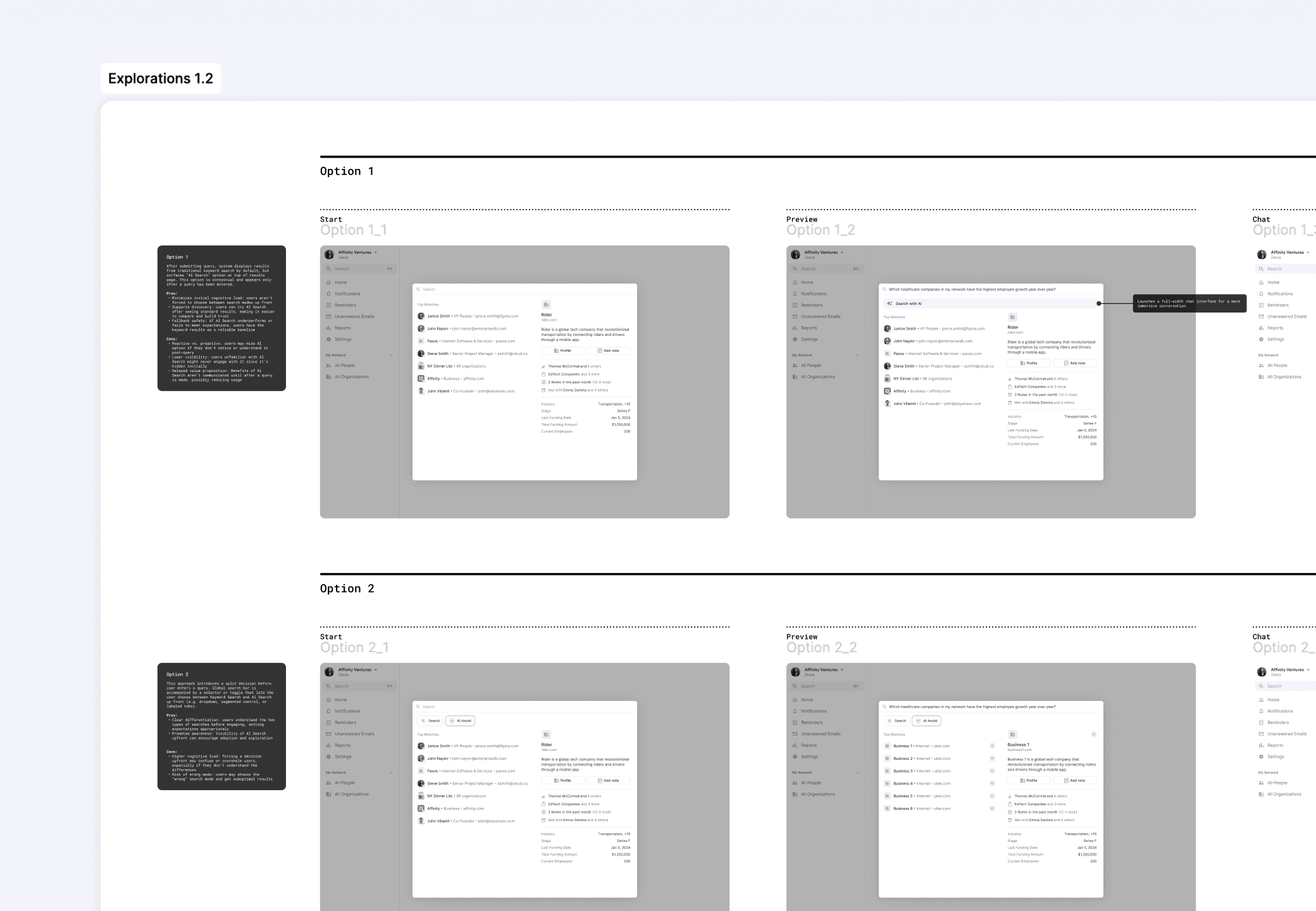
After early explorations, we brought a few concept back to customers and uncovered insights that challenged our assumptions:
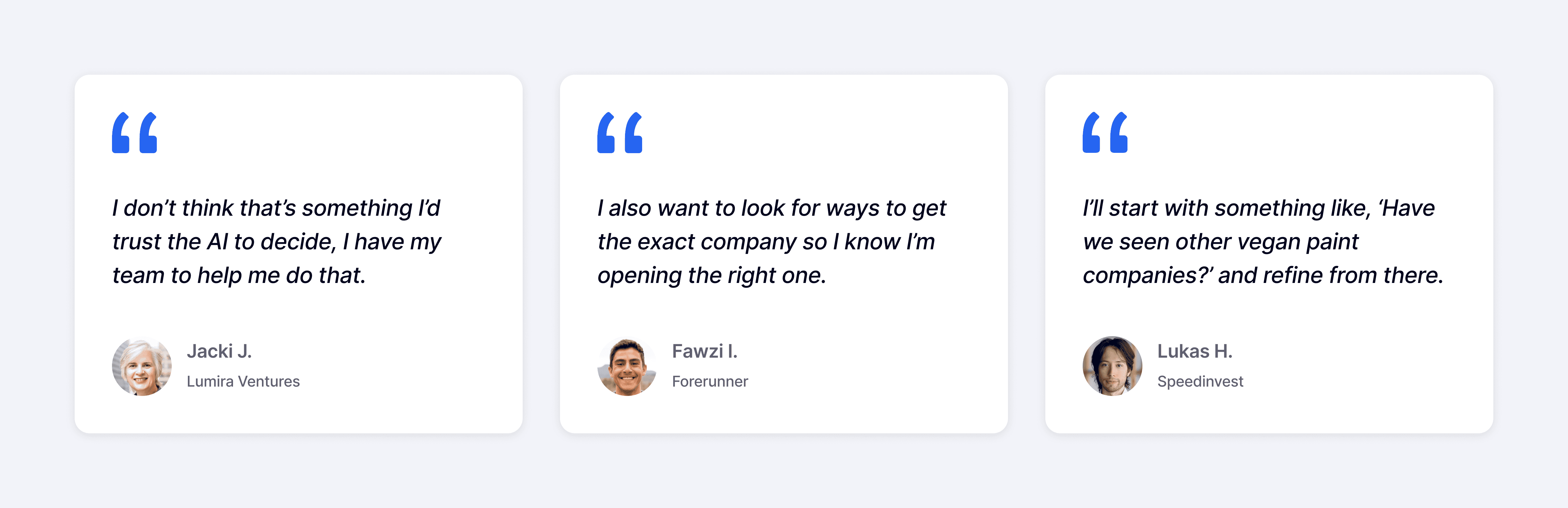
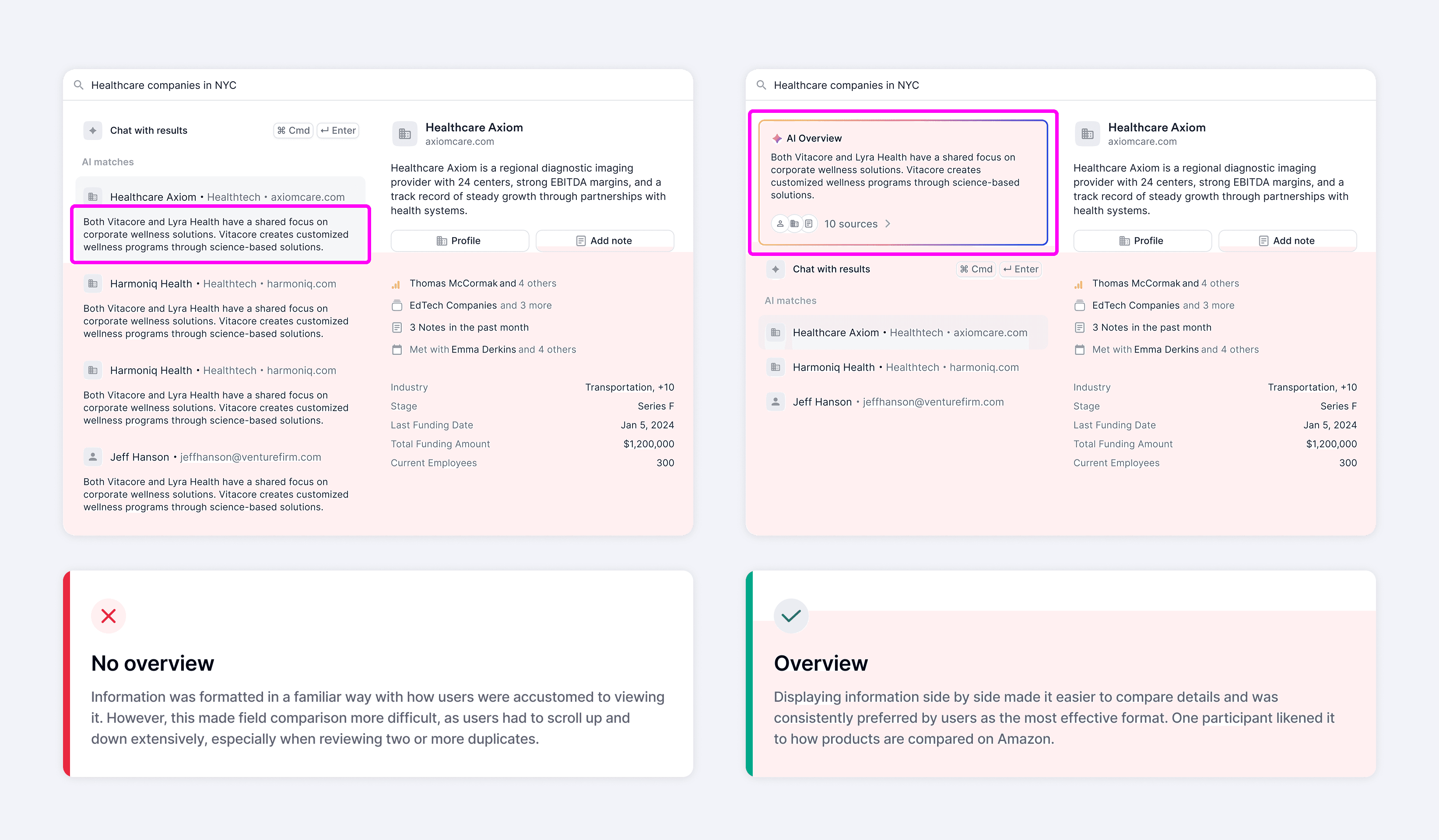
There was still some skepticism toward AI results: There was a need for more transparency into why results were generated and the sources they referenced.
Keyword search still held value: Users saw semantic search as more of a complement, and not a replacement, as keyword search was still preferred for its speed and precision.
There was a clear need for a more conversational experience: Users preferred to explore results through natural back-and-forth interactions, especially when recalling information or when their queries weren't fully defined.
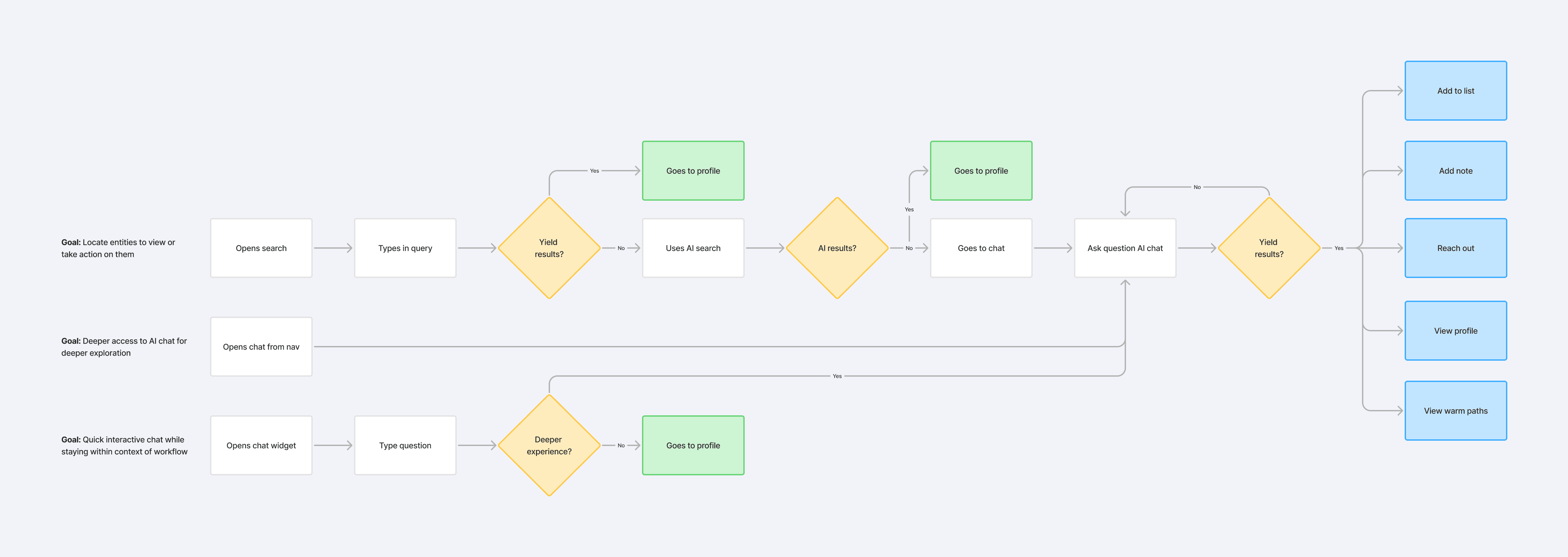
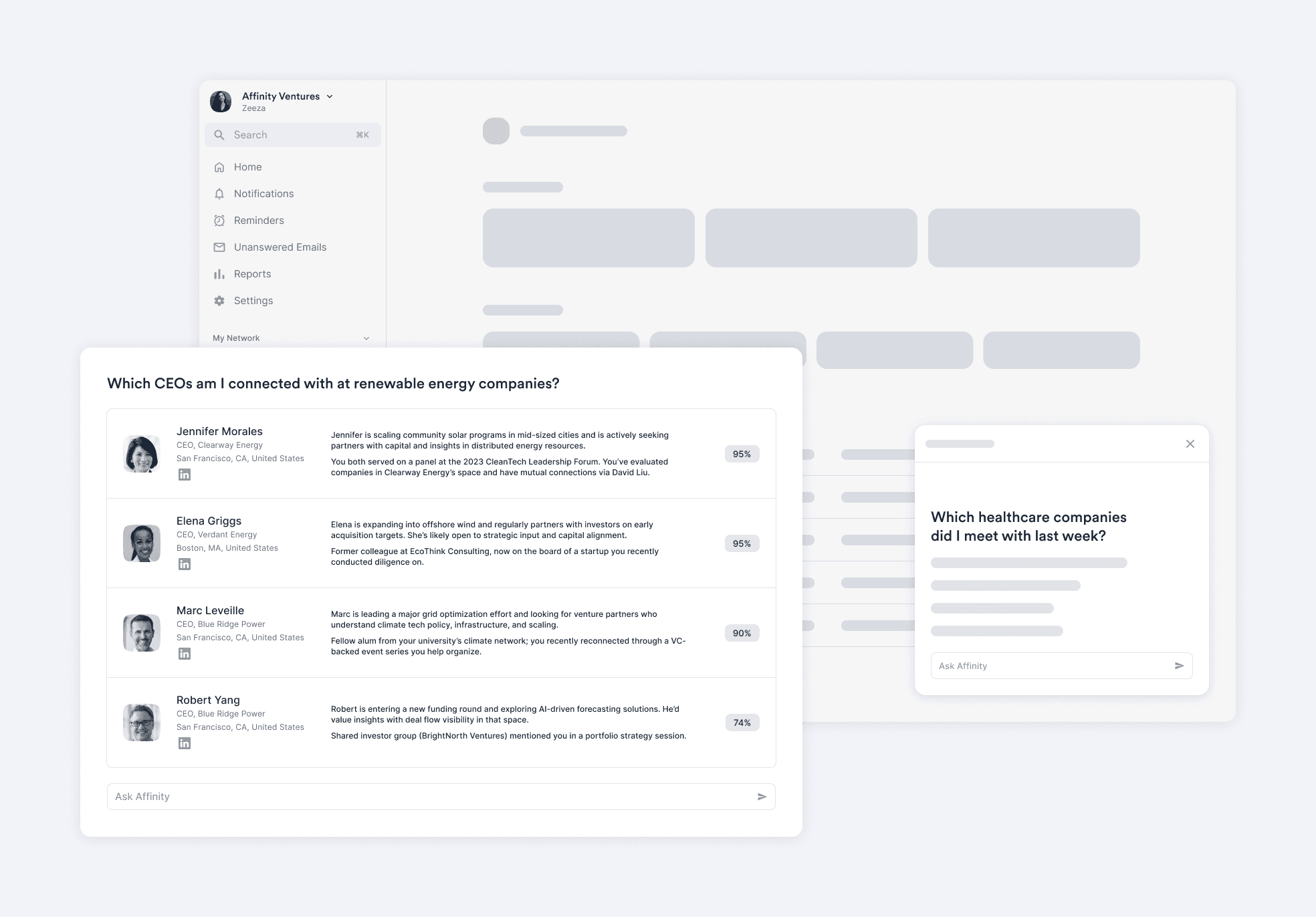
Although our focus was on introducing semantic search as an embedded experience, it was important to account for the broader ecosystem and its evolution in future phases.
We identified semantic search within global search as the entry point for new queries, and an assistive experience for refining within an existing context. While these experiences were interconnected, we still prioritized global search as it directly addressed the need of finding information when details were fuzzy.
Iterations
Iterations
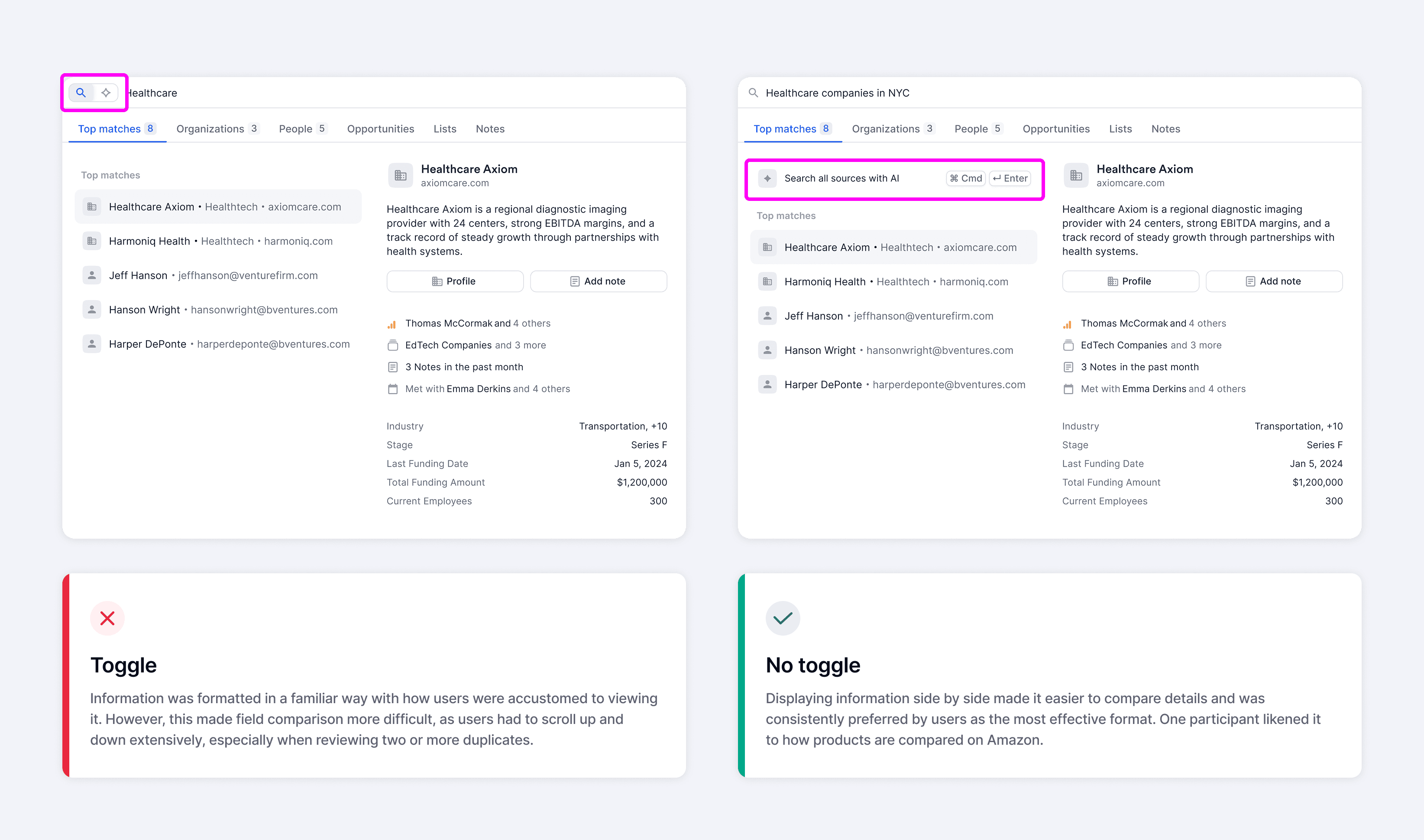
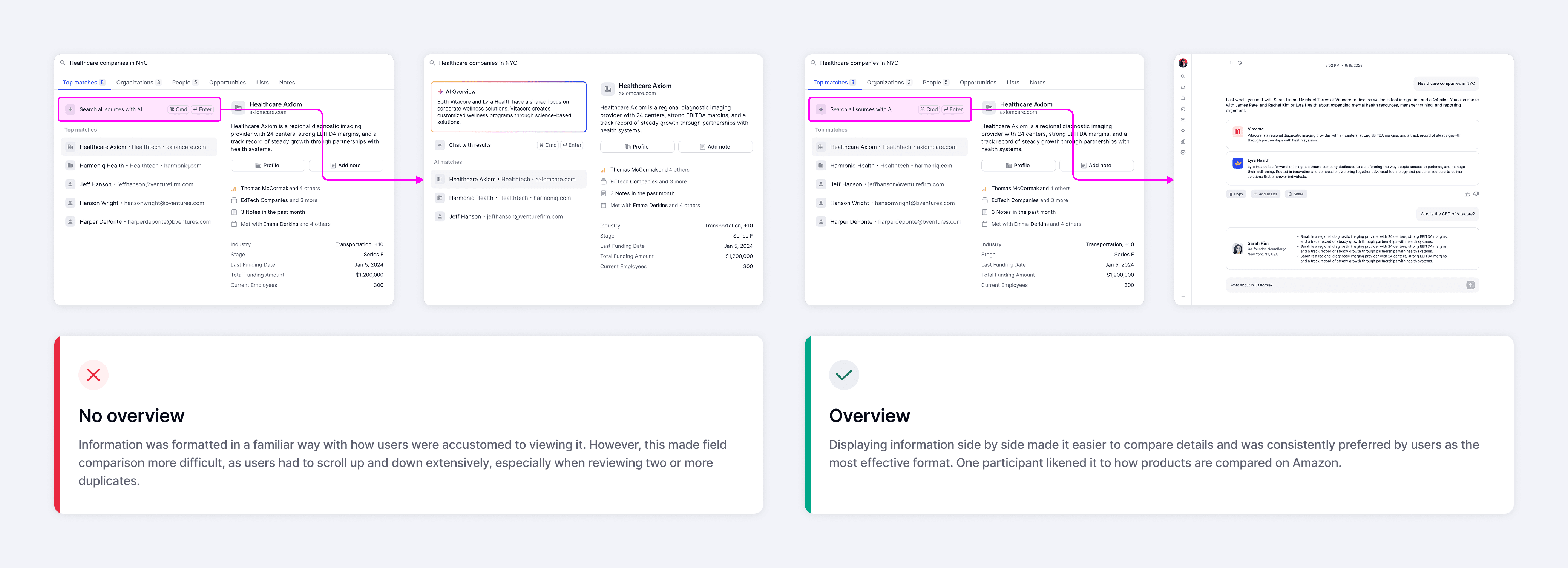
While the insights were clear, translating them into the right experience surfaced a few key dilemmas. We conducted a final round of prototype testing with customers to evaluate options we were exploring.
Final Designs
Final Designs
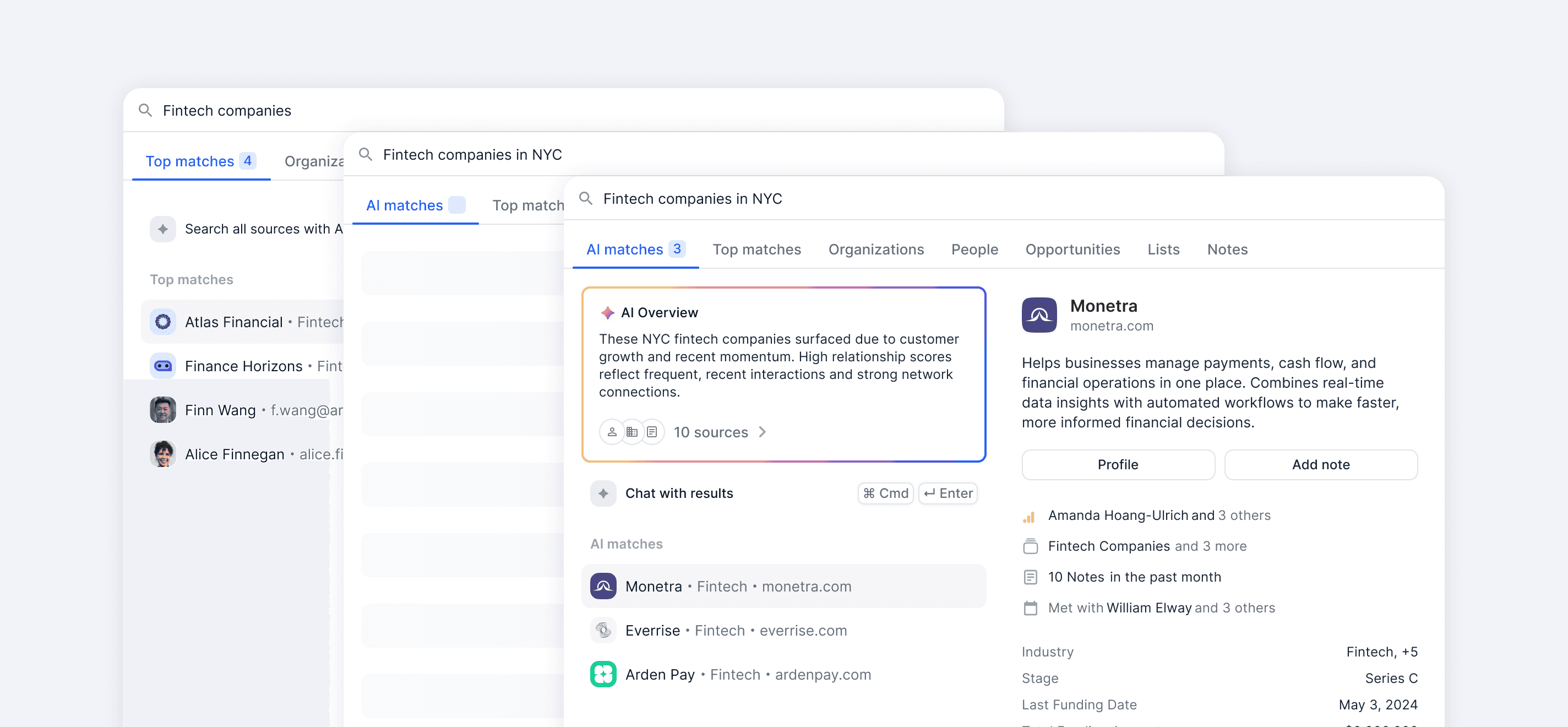
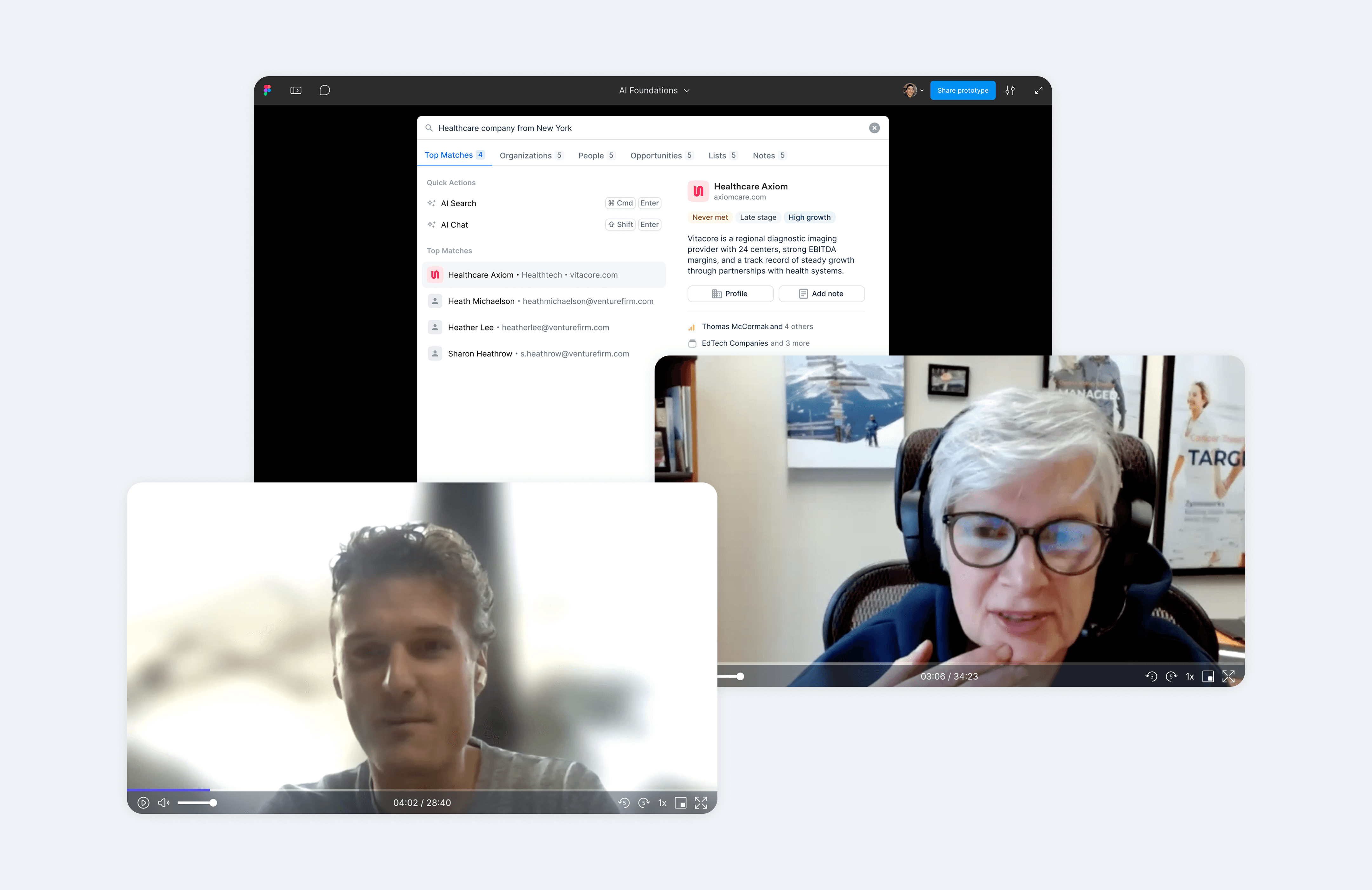
With the final designs, our main goal was to preserve the default keyword search experience while making it easy for users to access an AI-powered search, especially in cases where traditional search didn't return the results users needed.
I also led the effort to define a visual system for how AI would be represented across the product. While we explored more experimental directions, we ultimately prioritized a design language that was more recognizable and leveraged patterns users were already familiar with. This system was later adopted by marketing, which unified the product and brand experience.
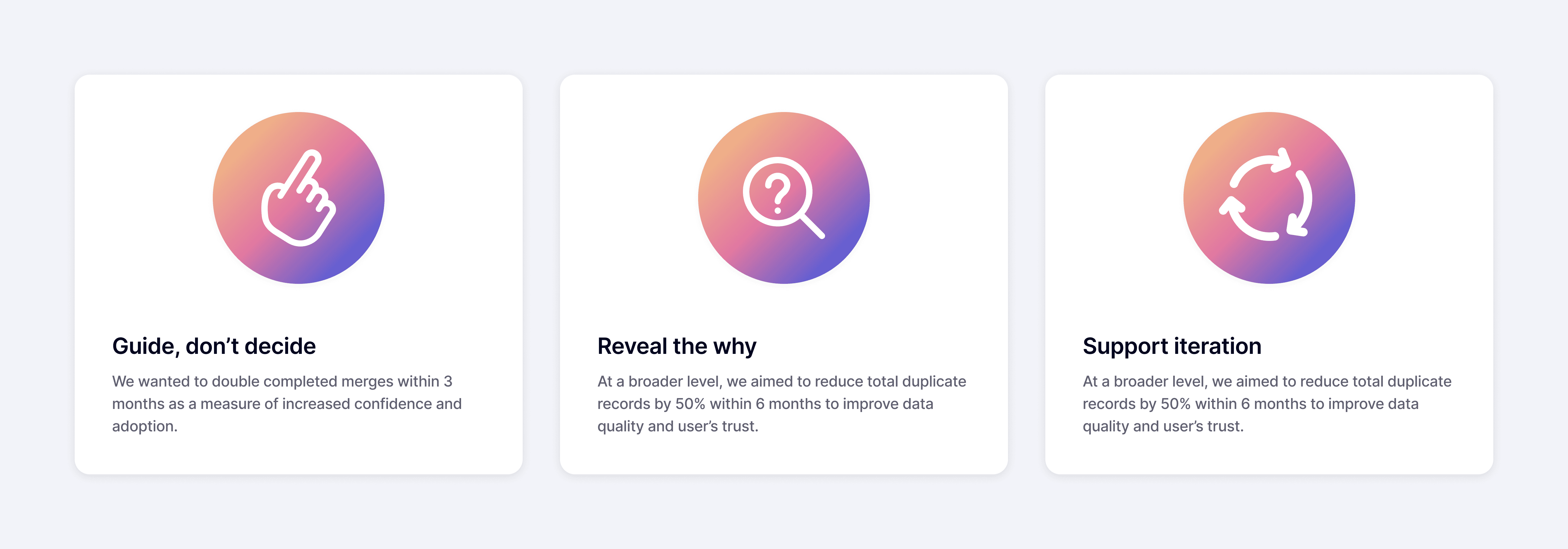
I defined a vision for a conversational chat experience that allowed users to explore results more deeply and iteratively refine queries through dialogue. Despite being widely adopted across products, users were drawn to it because it felt familiar and intuitive.
An assistive chat modal persists across the experience, providing a lightweight, always-available way to ask questions in context without interrupting the user’s workflow.
Impact
Impact
The research, strategy, AI direction, and implementation plan were presented to the executive team, helping shape Affinity's AI vision and influence product roadmaps across teams. The vision was later shared with customers at Campfire 2025, where it was also well received.
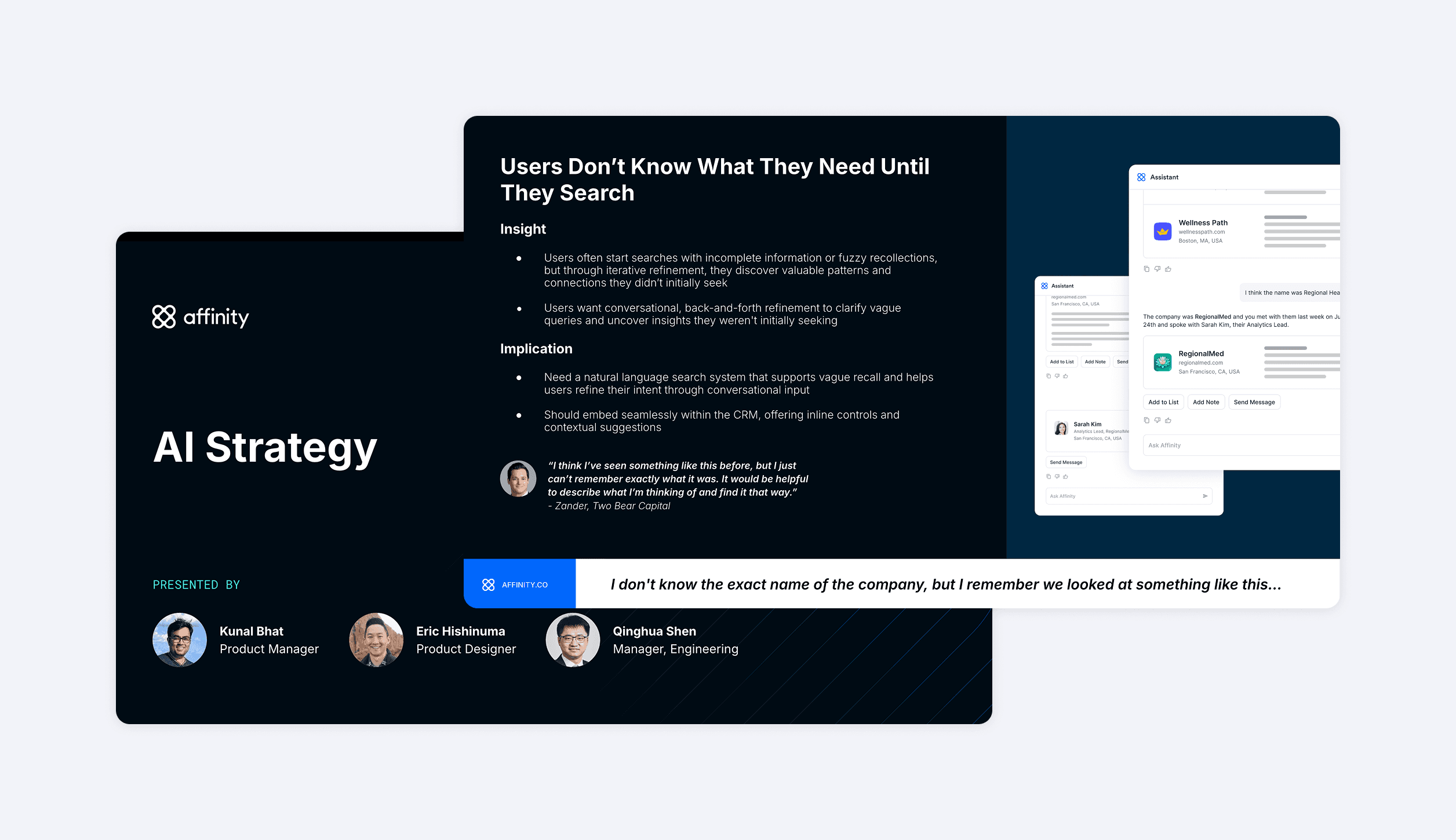
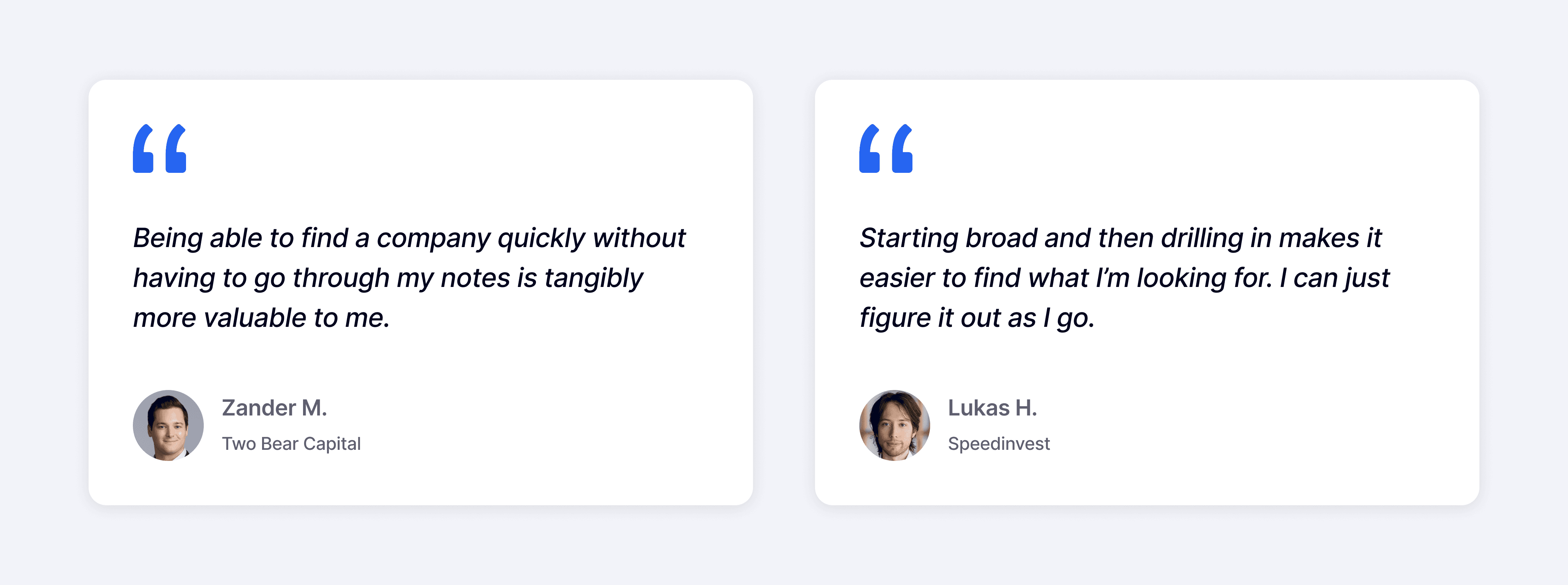
While I wasn't on the team long enough to see semantic search through full implementation, early testing showed strong positive feedback from customers and clear alignment with their expectations, which gave us confidence we were solving real problems and not just adding AI for its own sake.
Takeaways
Takeaways
Introducing AI came with strong leadership interest and pressure to move quickly, bringing heightened visibility as multiple teams depended on it for their roadmaps. To keep everyone aligned, clear and consistent communication was critical. We regularly shared user research findings and work in progress through weekly product updates and quick Slack posts to ensure teams stayed informed.
Equally important was articulating the clear long-term vision for AI. By creating hi-fi mockups and prototypes early on, we were able to align stakeholders and build confidence in why we were prioritizing certain directions and starting where we did.