AI Search
Senior Product Designer
2025

Problem
Keeping pace with changing expectations
As a platform built to help investors uncover insights, Affinity recognized the need to evolve beyond manual workflows and align more with what customers expected of digital experiences as AI became more prevalent.
Expectations were shifting quickly and many customers felt Affinity was no longer meeting their baseline needs. Within just a year, our survey showed a significant increase in teams planning to incorporate AI into their workflows, which highlighted the opportunity to rethink how the product could better support them.
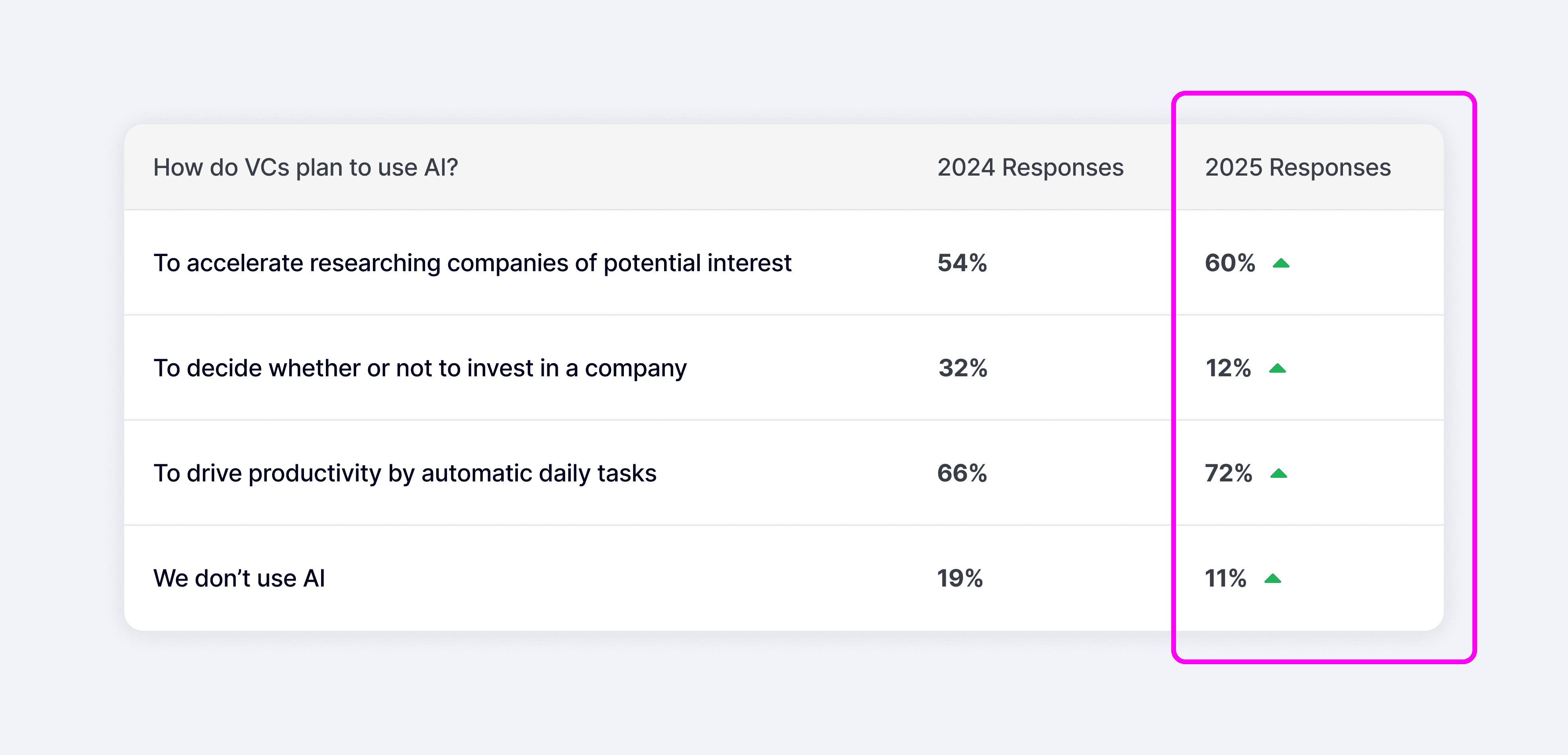
Growing customer demand and the evolving AI landscape created a strong sense of urgency among leadership and we knew we needed to move quickly to avoid falling behind the market.
Research
How can AI deliver meaningful value?
Although we knew that AI needed to be included in our broader strategy, we wanted to avoid adding an AI chat experience just because everyone else was doing it. We were looking to understand where the real need was and identify how it could deliver genuine value.
I led a round of interviews with some of our largest customers to better understand their pain points in the current experience, how they were using AI in their workflows at that time, and where they felt Affinity was falling behind.
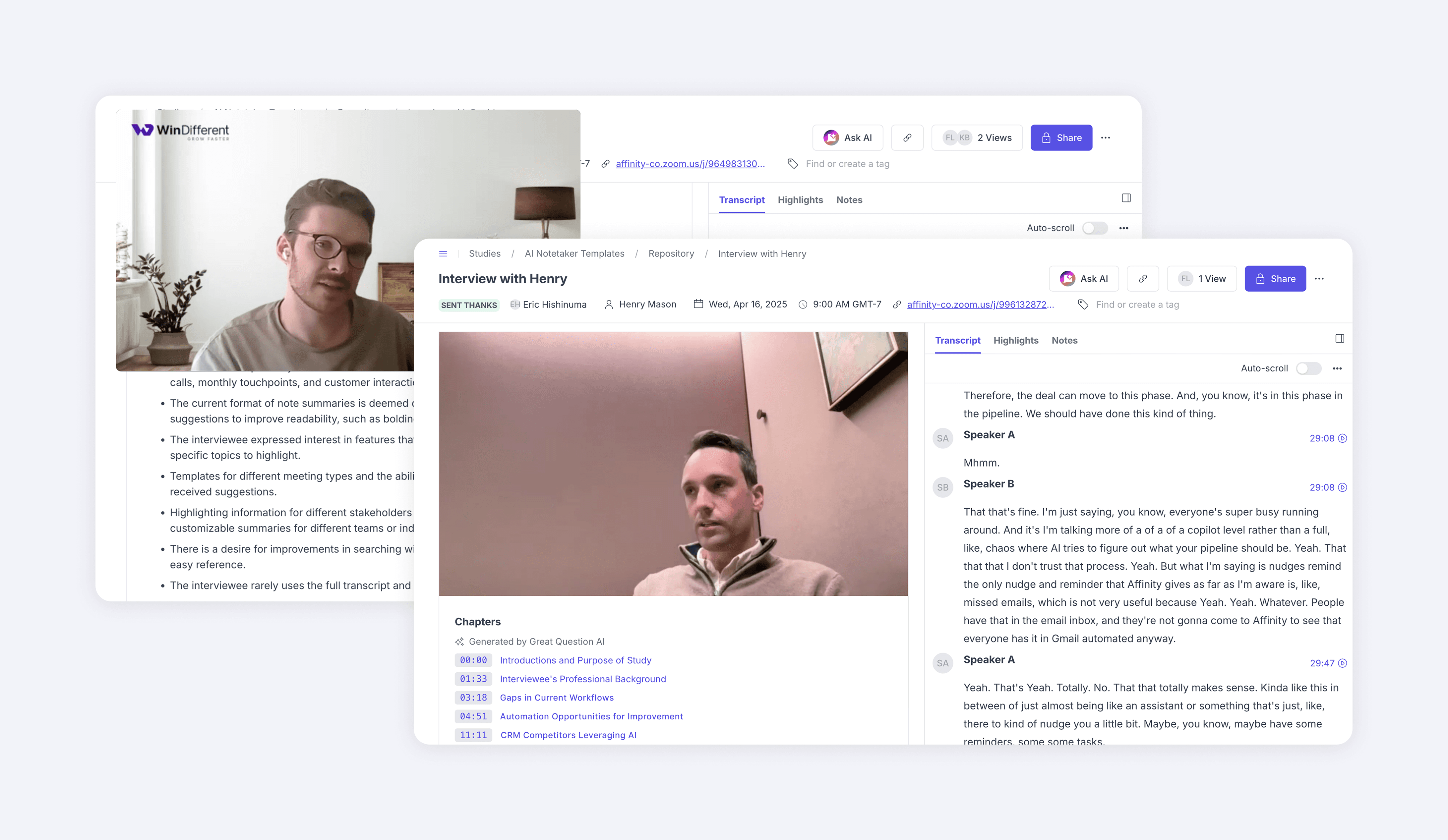
Since Affinity is a relationship intelligence platform, users spent a significant amount of time evaluating relationship strength, gathering context, and determining the right person to engage for a potential opportunity. A lion's share of this process was manual and prone to blind spots since information was fragmented across emails, notes, and CRM records.
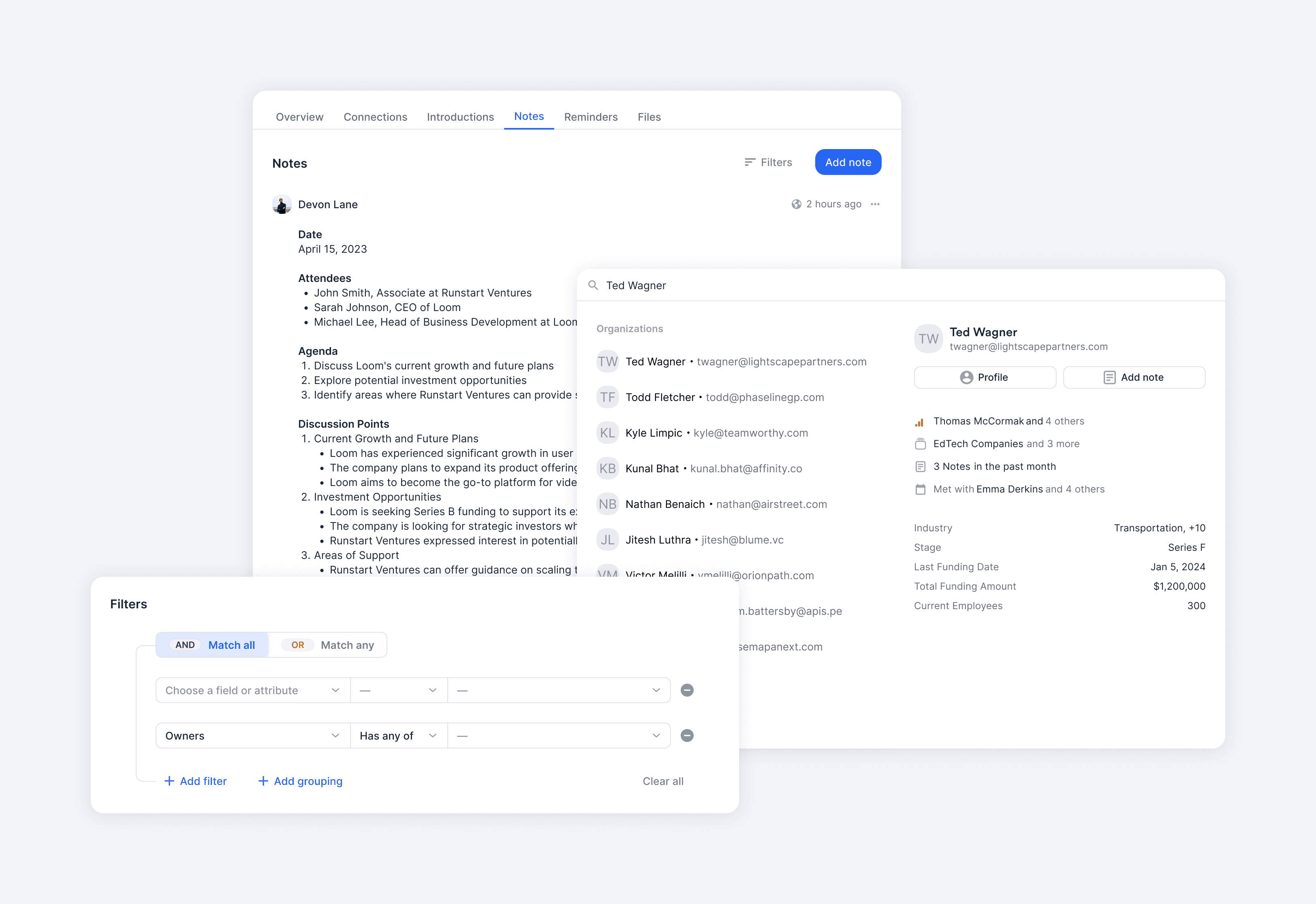
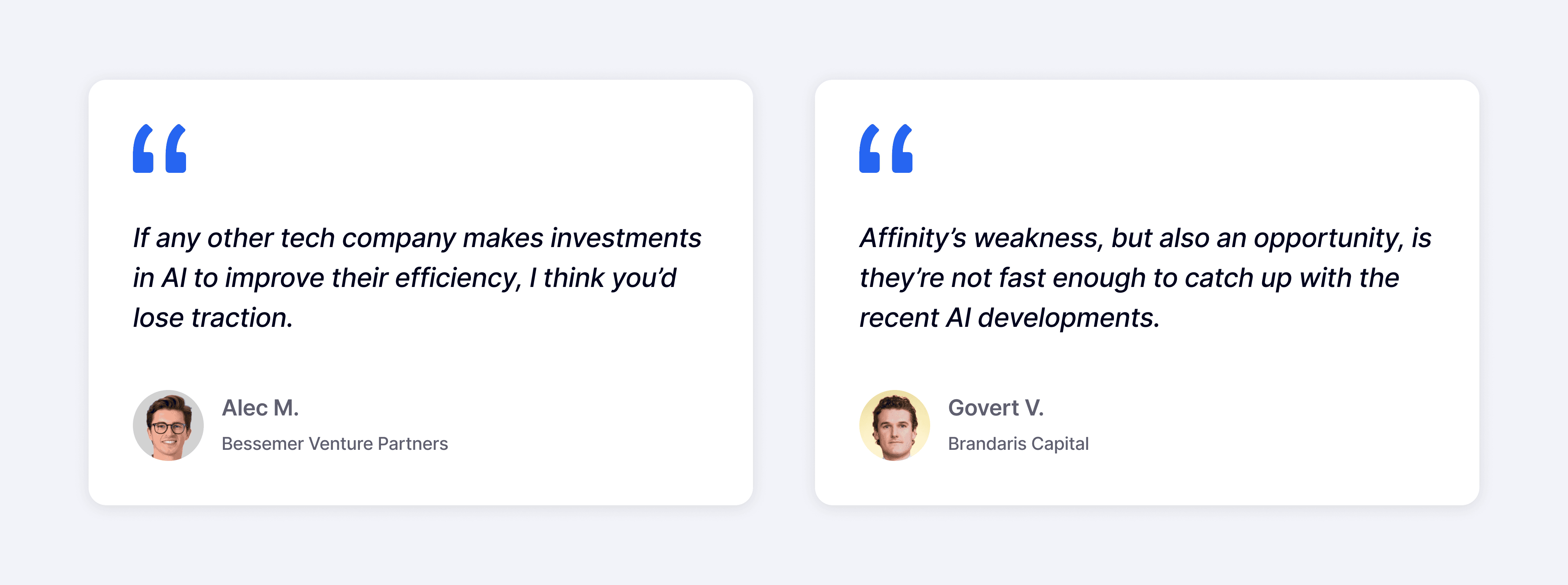
We learned that some customers were even resorting to third-party AI tools, like ChatGPT and Perplexity, to manually piece together insights outside of Affinity, which was a strong signal that the product wasn't supporting their needs. We saw an opportunity for AI to synthesize this fragmented information and help users make faster and more confident decisions.

Hypothesis
Making it faster and easier to discover insights
We hypothesized that introducing AI into the CRM could help synthesize relationship data across emails, meetings, and notes and help users to identify the right people to engage more quickly and confidently.
This could help address gaps in the existing experience and increase engagement by making Affinity more valuable within customers' everyday workflows.
Approach
Exploring different interaction models
There were several potential ways users could access insights and we wanted to understand which interaction model felt most useful and natural within their workflow. We explored three different approaches:
Recommendations: Proactive insights surfaced in context
Search: Finding answers to specific questions
Dialogue: Refining ideas through conversation
We presented each concept to customers to gather feedback on where each model worked best and which they preferred.

While customers found value in all three interaction models, we chose to start with search since it offered the best balance of customer value, user control, and feasibility.
From a technical perspective, search also gave us a way to collect real user queries and understand how people naturally asked questions. Those interactions could be valuable training data for improving the response accuracy and informing future recommendation models. By starting with search, we could establish confidence in the underlying capabilities before expanding into more proactive and conversational experiences.

Explorations
Finding the right place to start
Rather than creating a separate destination for AI search, we chose to integrate it into Affinity's existing global search. Since global search was already one of the product's highest-traffic entry points, this gave us a stronger opportunity to drive adoption by introducing the new capability within a familiar workflow.

When I began my explorations, I assumed users wouldn't care whether results came from a keyword search or AI — as long as they found what they were looking for, the method wouldn't matter to them.
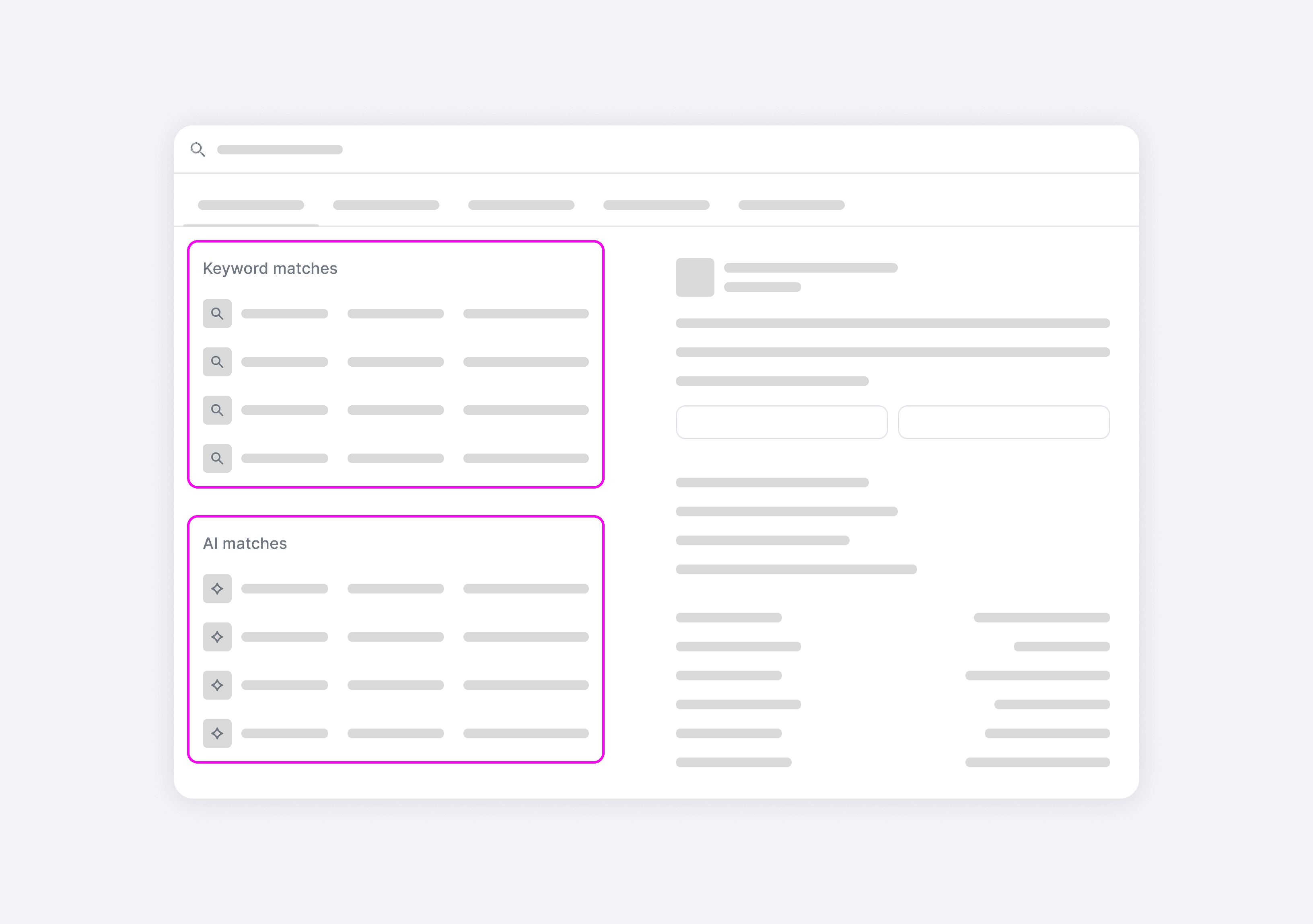
However, we learned that users approached each result type with different expectations and wanted ones that were AI-generated results to be clearly distinguished so they could evaluate them through the right lens.
Separating the two made even more sense since they would both supported a different type of interaction model. Keyword search returned results instantly as users typed, while AI search would require users to submit a query and wait for the system to generate a response.

Iterations
The need for greater transparency into results and the ability to ask follow-up questions

As we reviewed our initial concepts with customers, a few additional insights emerged:
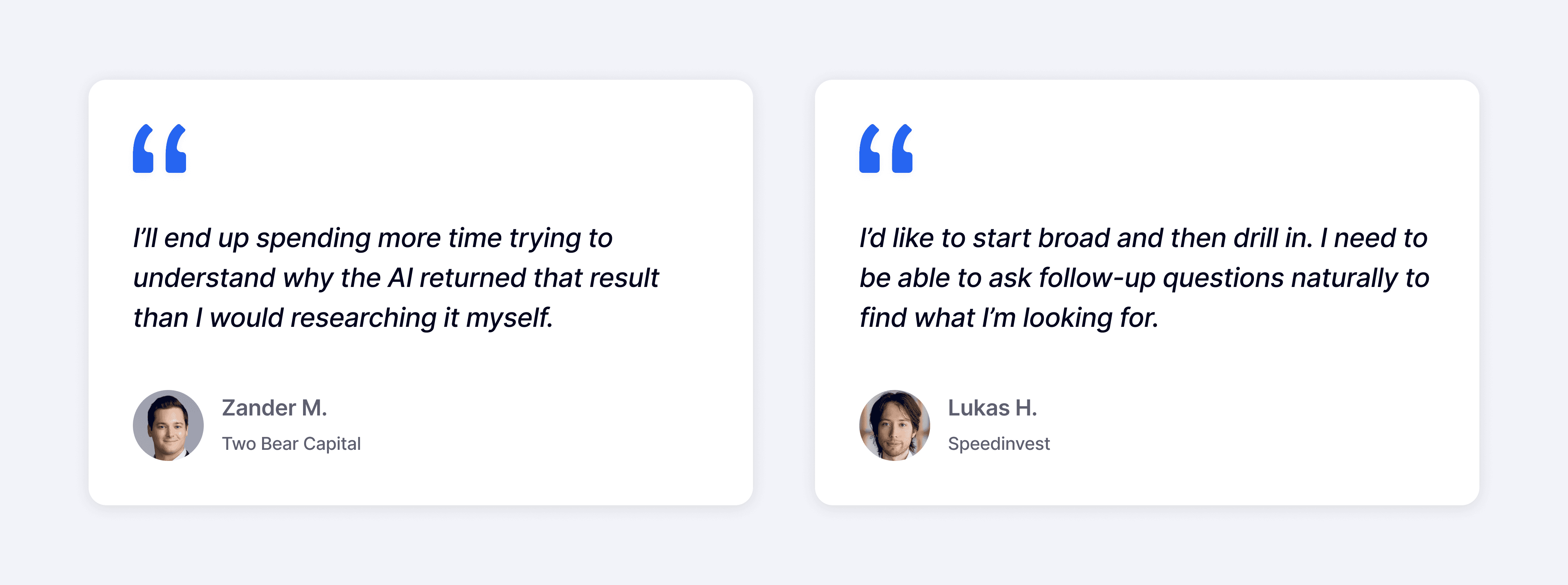
Trust was a major barrier. Users were skeptical of AI-generated results and wanted greater transparency into where the information came from. This was especially important because the ML team was still building a proof of concept and the responses weren't always accurate. To preserve trust, we needed to prioritize clear citations and direct links to sources so users could quickly verify the answer for themselves.

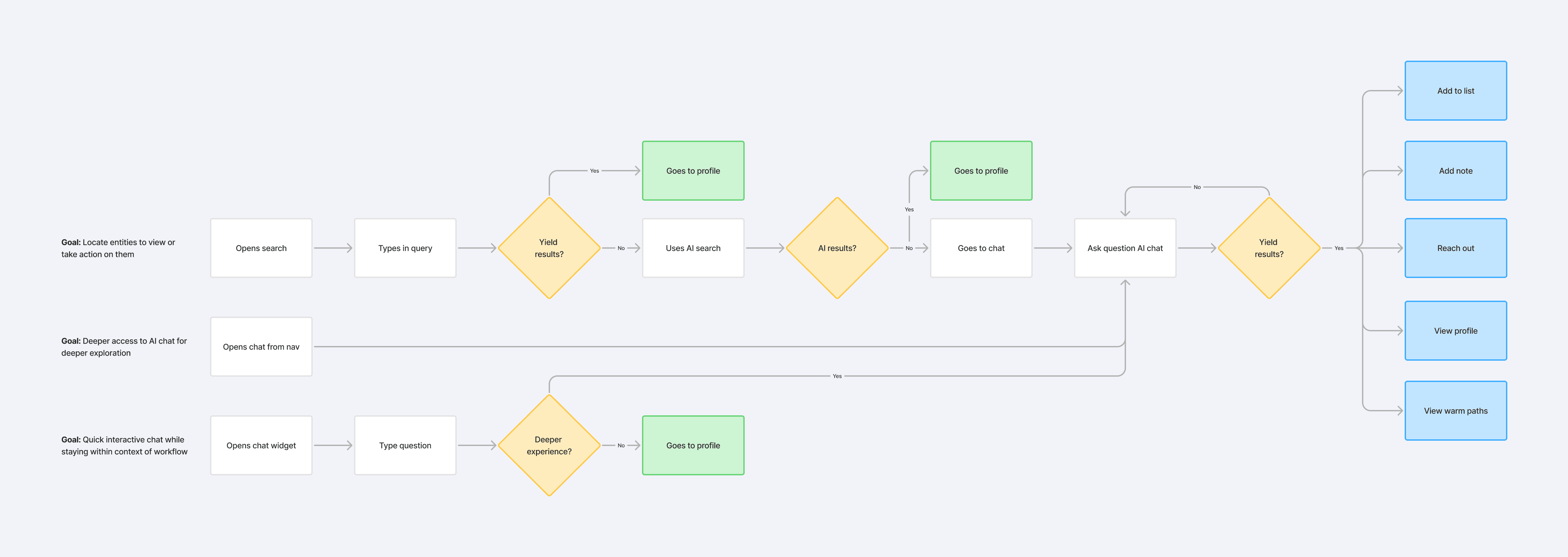
Users didn't always know exactly what they were looking for. They often started with a vague idea and needed help refining it, which validated the value of a conversational experience that could progressively narrow in on the right answer. This also aligned with the AI tools they were already using and familiar with.

Although conversational AI wasn't part of the initial scope, it was important for us to still think about the broader ecosystem to ensure that AI Search could seamlessly evolve into a richer conversational experience over time.
Final Designs
Communicating the vision and execution plan
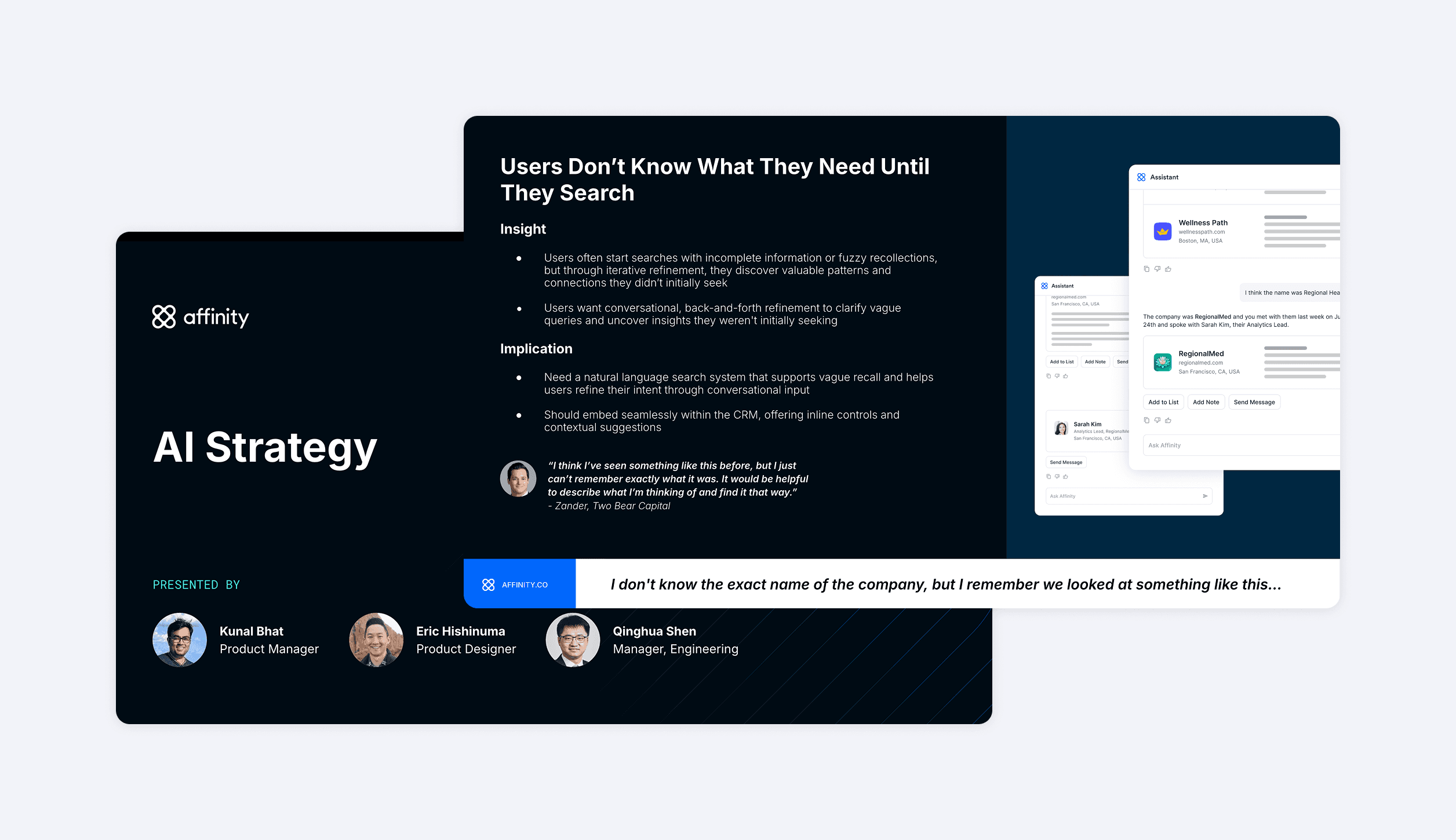
We presented our AI strategy to the broader organization and shared a vision for evolving Affinity into a more intelligent partner that could proactively surface insights, answer questions through an AI-powered search, and help users refine questions through a conversational experience. Longer term, the vision also included suggesting automations that users could review and approve to help streamline their workflows even more.
We paired that vision with a phased roadmap showing how we planned to bring it to life, with AI search positioned as the first milestone. Sharing the broader strategy gave teams visibility into the product's long-term direction and helped them understand how AI could influence their own roadmaps and priorities.


Establishing AI design principles was important since AI would shape experiences across the product. We defined a consistent framework so every AI interaction could feel predictable, familiar, and in alignment with user expectations, which made the experience easier to understand and trust.

Impact
Establishing the AI roadmap
Our strategy laid the foundation for Affinity's broader AI roadmap and were introduced to customers as part of our future vision. Early feedback confirmed that AI-powered search solved an immediate pain point while also demonstrating the long-term value of our AI direction.
Takeaways
Navigating ambiguity and creating clarity
The AI initiative drew significant leadership attention and cross-functional visibility, as multiple teams relied on it to inform their own roadmaps. Keeping everyone aligned was just as important as designing the product itself. We regularly shared customer research, design explorations, and work in progress through weekly product reviews and Slack updates to ensure teams had visibility into key decisions and the rationale behind them.
Equally important was communicating the long-term vision. By creating hi-fi concepts early on in the process, we gave stakeholders a tangible view of where we were headed. This helped build alignment around the broader strategy, why semantic search was the right starting point, and how each milestone contributed to the future direction of the product.
This project helped reinforce to me that design extends beyond just the interface, especially in emerging spaces like AI. It plays a critical role in aligning teams around a common vision and helps us navigate ambiguity with confidence.